Course Profiles / Michigan
American Dunes: A Course Profile
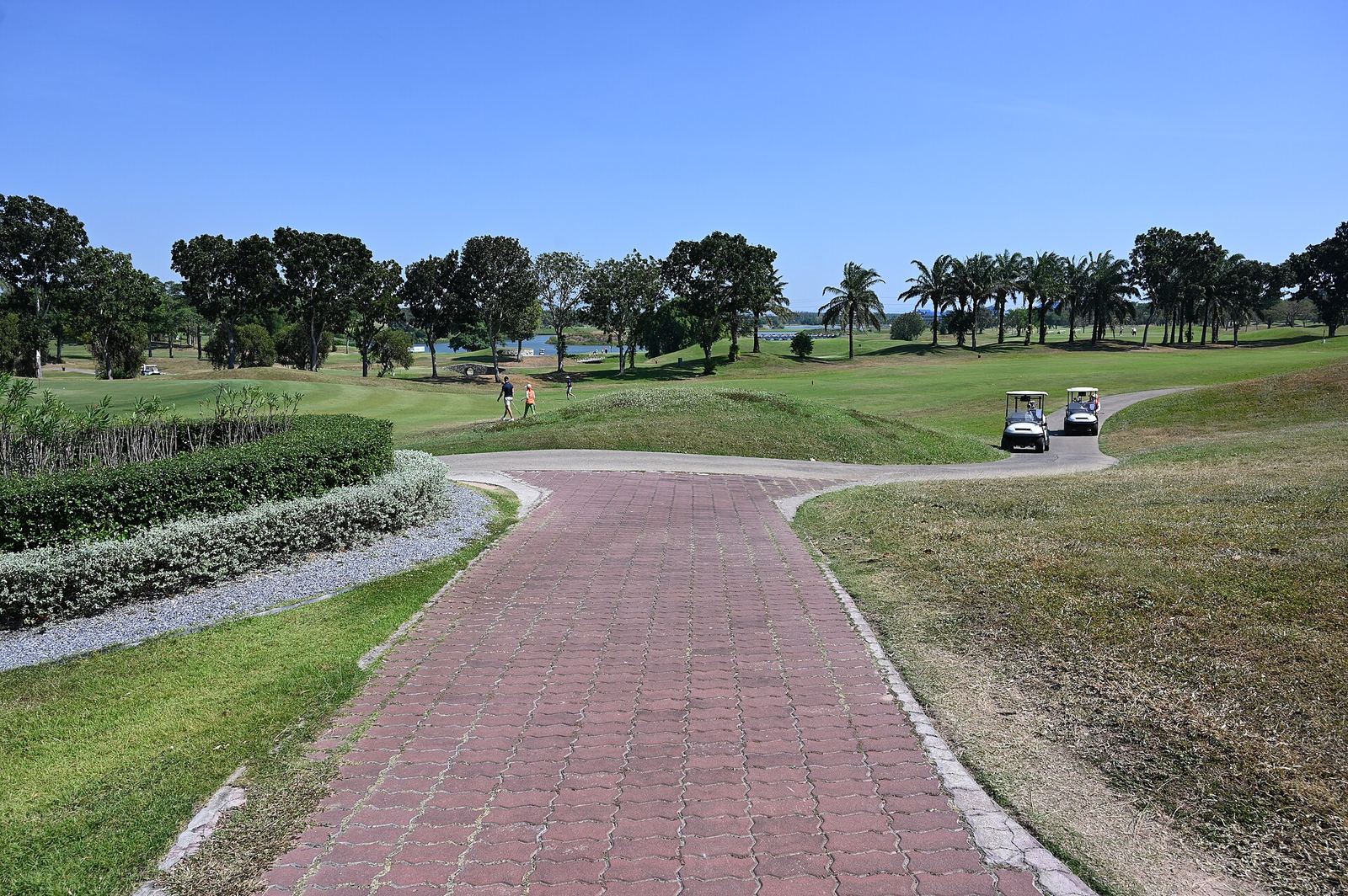
Every day at 1 pm, play stops at American Dunes. Not for weather, not for a slow group, but for Taps, played at the American flag memorial while a golf course full of paying customers stands still in the middle of its round. There is no other daily ritual in American golf quite like it, and it tells you immediately that this public course in Grand Haven, Michigan, is organized around something other than the usual resort arithmetic. American Dunes is the birthplace of Folds of Honor, the organization founded by Lt. Col. Dan Rooney that funds scholarships for the families of fallen and disabled service members. All of the club's annual profits go to Folds of Honor. All of them. The golf has to be judged inside that fact, not as a footnote to it.
The course itself is a Jack Nicklaus redesign of the former Grand Haven Golf Club, opened on May 2, 2021. Nicklaus waived his design fee for the project, a detail worth pausing on because architects of his stature do not work free, and the waiver signals what this project was: a rebuild with a mission attached, executed by the biggest name available. The renovation removed more than 2,000 trees to reveal the sand dunes that had been hiding under the old Grand Haven routing, and the finished course keeps 30 bunkers across its par 72 layout of 7,213 yards. Two thousand trees is not a trim. It is a decision to turn a wooded Michigan course inside out and let the sand that was always there become the architecture.
Sand, width, and a 7,213 yard argument
The golf case for American Dunes rests on that transformation. Tree lined Michigan golf is the state's default setting, pleasant and often interchangeable. Dune golf is rarer, more exposed, more strategic, and it photographs the way it plays: open ground, sand everywhere it should be, and wind with a clear run at the ball. At 7,213 yards from the back, with only 30 bunkers, the defense is not a bunker count. It is the scale of the place, the exposed turf, and angles across open sand. Nicklaus courses get accused, fairly on some of his work, of demanding one shaped shot after another. Here the removal of the trees argues the other way. The redesign widened the world and let the dunes do the talking.
Where it sits in the state is covered in the Michigan state ranking, a list with serious public depth. American Dunes earns its hearing on that list on the golf alone, which is exactly what its founders should want said about it.
The honest concession
The mission cuts both ways, and a rankings publication should say so. A course wrapped in a cause this good collects praise that its architecture has not always earned, because criticizing the golf feels like criticizing the scholarships. It is not. The families are funded either way, and the honest way to honor the project is to hold its golf to the same standard as any other 7,213 yard public course asking for a traveler's day. On that standard, a fair question remains: how much of American Dunes is genuinely distinctive architecture, and how much is a solid Nicklaus course on dramatically improved ground? The tree removal and the sand exposure are real and they matter. The routing underneath is the old Grand Haven property, rebuilt rather than reimagined from a blank sheet.
There is a second, smaller concession. The 1 pm stoppage will move most golfers, and it should. A few will find the ceremony interrupts the round's rhythm, and the club plainly does not care, which is its right. Know before you book that the day is structured around it.
Who it suits
American Dunes suits the golfer who wants the round to mean something beyond the card, who plays public golf in Michigan and wants the wide, sandy version of it rather than another corridor through the trees. It frustrates nobody on access grounds: it is public, in Grand Haven, and open to anyone who books. What it asks in return is that you stop at 1 pm, stand still while Taps plays over a golf course built to fund other families' futures, and then walk to the next tee and try to concentrate on a golf shot. Most people manage the shot poorly and remember the pause for years. That trade is the whole point of the place.