Town Guides / South Carolina
The Hilton Head Island Golf Guide
The lighthouse is not a lighthouse. The red and white tower behind the 18th green at Harbour Town was built as a landmark, not an aid to navigation, and it has been doing its real job since 1969: giving one golf hole the most recognizable backdrop in the South and giving every Hilton Head trip a picture it has to earn. The island's golf is bigger than that image, though. Two resort campuses, Sea Pines at the south end and Palmetto Dunes up the beach, hold five courses between them that can fill a trip without a single repeat. The mistake is coming all this way and playing only the famous one.
Hilton Head is a resort island, and the access follows from that: no member doors to beg at, just tee sheets, seasons and rates. The planning questions are order and emphasis, and they matter more here than the brochure suggests, because these five courses disagree with each other productively.
Sea Pines first, and Harbour Town last
Start inside Sea Pines with the two Pete Dye courses in the order that teaches the most. Heron Point, Dye's 2007 redesign of the old Sea Marsh course, is the opener: shorter and more strategic than Harbour Town, all risk and reward angles, water and waste areas asking you to pick a side. Play it first and your group learns Dye's local language, small targets and decisions, at a friendlier scale. It also carries a quiet bit of symmetry, Dye returning to Sea Pines nearly 40 years after the course that made the island.
Harbour Town itself should close the Sea Pines portion of the trip, ideally the trip's final round. Designed by Dye with Jack Nicklaus consulting and opened in 1969, home of the PGA Tour's RBC Heritage since that same year, it is a short, tight shotmaker's course by modern Tour standards at about 7,100 yards, with Dye's small greens and railroad tie bunkering that broke from 1960s norms when it arrived. Its defense is position, not power. Play it early in a trip and the other courses feel like warm ups that came too late. Play it last, with your iron game calibrated by Heron Point, and the lighthouse finish lands the way it should. On money, the record is plain: resort access, with non guest fees in the $300 to $450 premium range. Budget for it once, play it once, play it ready.
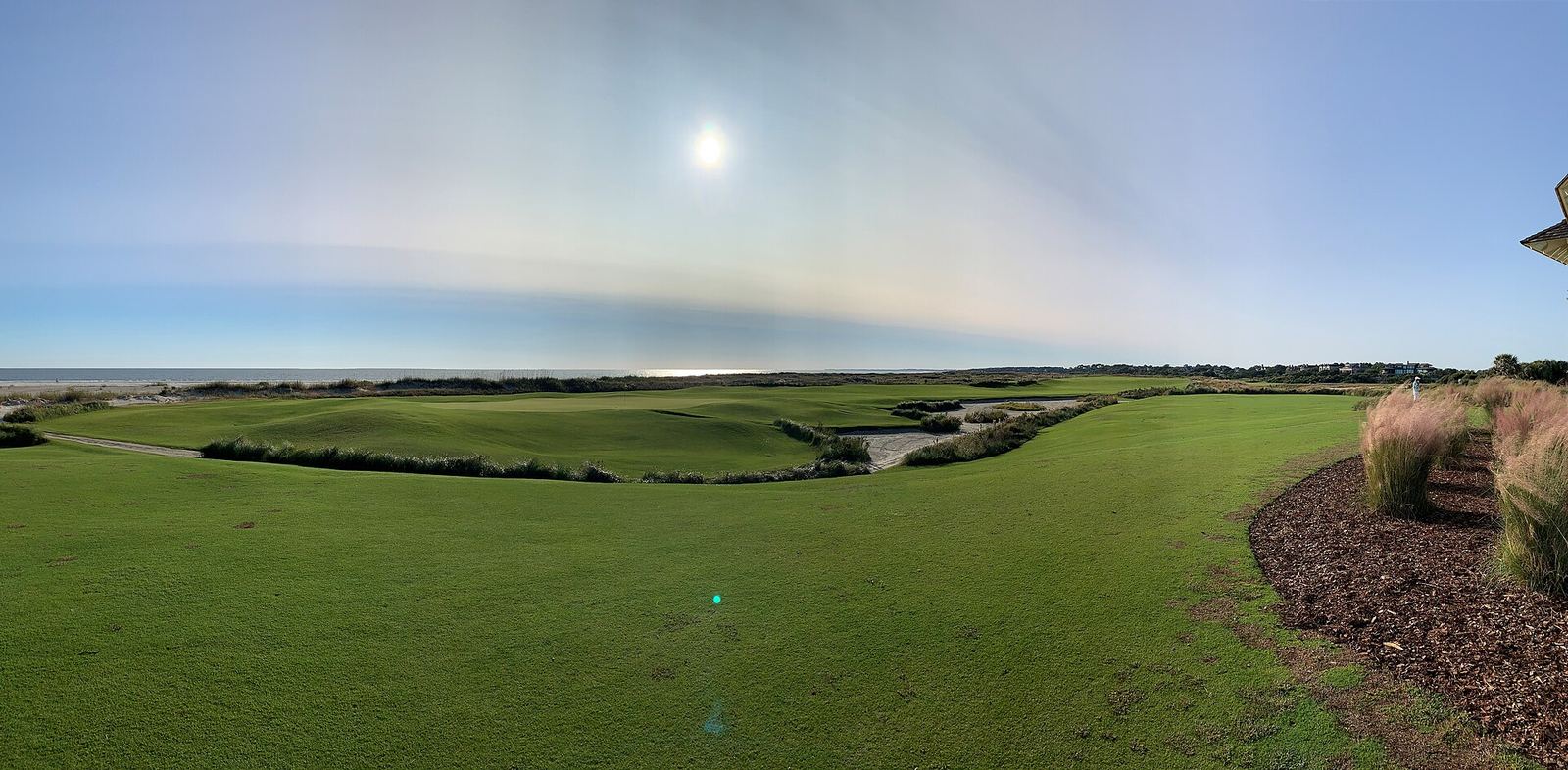
Atlantic Dunes is the Sea Pines course to schedule in the middle, and it holds the island's origin story. Davis Love III rebuilt the old Ocean Course and reopened it as Atlantic Dunes in 2016. The original, by George Cobb in 1962, was Hilton Head's first course. Love restored the ocean views and dune character, and one hole plays to the beach, the island's only oceanfront hole lineage. It is the round that connects the modern resort to the island's beginning, and in the late afternoon, with the light off the water, it can steal the trip from its more famous sibling. We said can. Harbour Town's fans may file their objection at the 18th green.
Cross the island for the other resort
Palmetto Dunes runs three courses of its own, and a Sea Pines only trip is half a trip. The Robert Trent Jones course, opened in 1969 and renovated by Roger Rulewich in 2002, is the headline: a lagoon threaded resort layout whose par 5 10th plays directly toward the Atlantic. Jones and Dye opening courses on the same island in the same year is a neat historical accident, and playing both headline courses back to back is the island's best architecture argument, Jones's scale and sweep against Dye's angles and small greens. We side with Dye. Play the Jones course and you will at least understand the other side, which is more than most partisans manage.
The Arthur Hills course, opened in 1986, is the local knowledge play. It runs partly off the resort property through the Leamington community, with holes most guests do not expect, and its lagoon design rewards the player who asks the starter one question before teeing off: where does the water actually bite? It is the third Palmetto Dunes course by billing and often the second by the group's dinner vote.
Access across both resorts is bookable and seasonal. Rates climb in spring, peak around the Heritage in April, when the island fills with plaid and the Harbour Town tee sheet becomes the hardest ticket in town, and ease in the heat of summer and the quiet of late fall. Spring and fall are the golf seasons. Summer is a family island with golf attached, hot and humid, best played early. Winter is the value play, mild more often than not.
The visitor's mistake is the single course trip: Harbour Town on Saturday, the beach on Sunday, home on Monday, five courses reduced to a photo. Sea Pines alone can fill a trip, as the island's own pitch goes, and Palmetto Dunes nearly can. Do the island properly and it takes four days minimum.
End where you knew you would, at the lighthouse, with the approach into 18 and the harbor going still behind the green. Some finishes are famous because they are photographed. This one is photographed because it finishes a round the way a last page should.