Town Guides / Arkansas
The Hot Springs Village Golf Guide
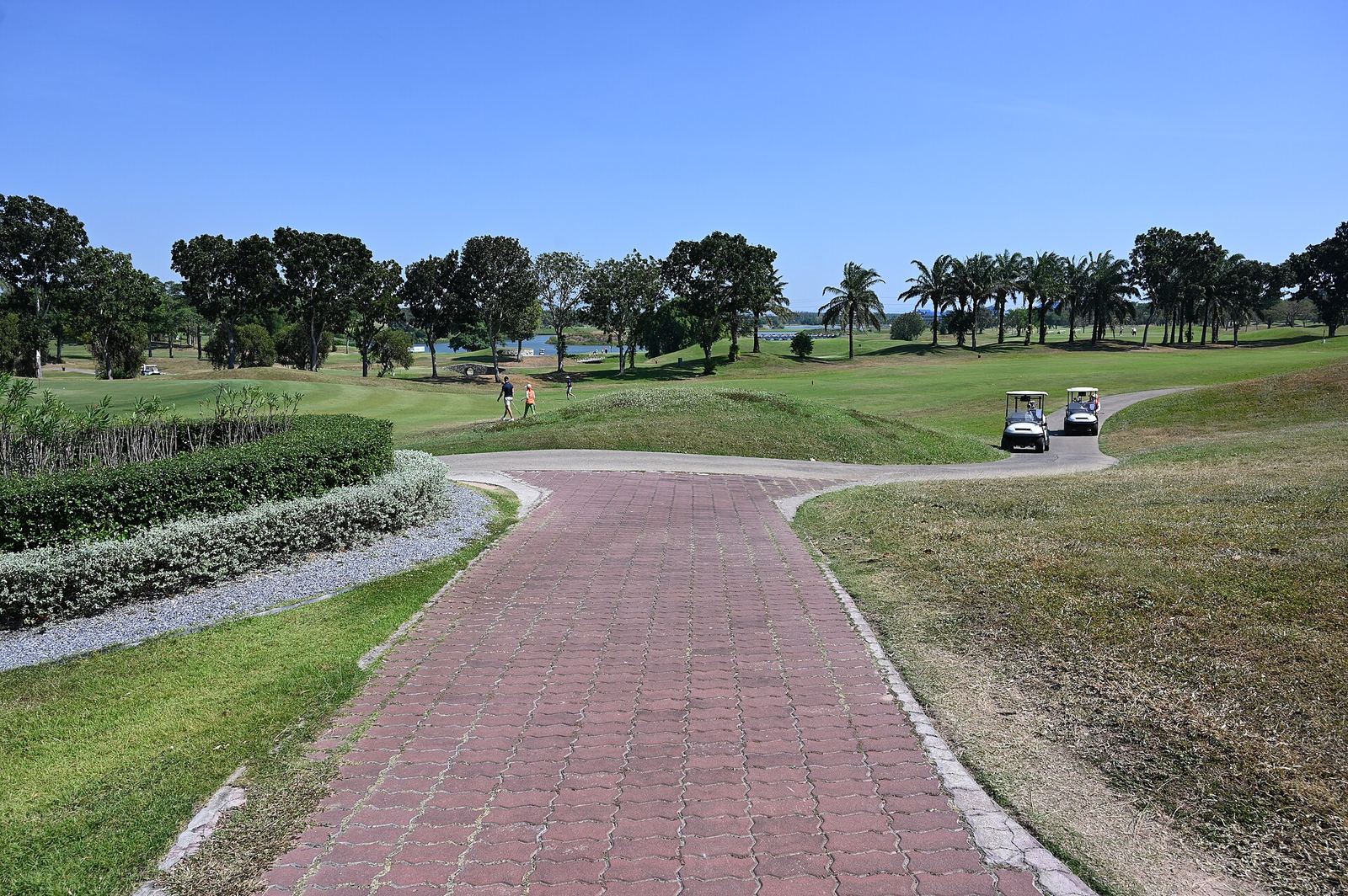
The gate tells you most of what you need to know. Hot Springs Village is America's largest gated community, roughly 15,000 residents spread through the Ouachita foothills of central Arkansas, and inside that gate the Village runs nine golf courses. Nine. For one community. This is not a town with a golf amenity bolted on. Golf is the organizing principle of the place, and a visit here works best when you treat it that way instead of trying to squeeze in a single round between other plans.
That changes the usual trip math. In most towns you pick the best course, build a day around it, and fill the gaps. Here the gaps are also golf. The question is never whether there is another tee time. It is which combination of courses makes a coherent few days, and whether you have the access to play the one course everybody names first.
Start With Access, Not Tee Times
Diamante Country Club is the private headliner, and it sits apart from the rest of the Village rotation. If you have a route in, through a member or a reciprocal arrangement, that round anchors the trip and everything else gets scheduled around it. Diamante is the course residents argue about with the most pride, the championship test in a community full of solid everyday golf, and it should not be wasted on an arrival day when you have been in a car for hours.
If Diamante is not available to you, do not treat the trip as a consolation prize. That is the honest strength of this place. Granada Golf Club, Balboa Golf Club, Cortez Golf Club, and Isabella Golf Club give you a full rotation without leaving the community, and the Village courses reward repeat play more than single visit box ticking. These are courses built for people who play three or four times a week, which means the interest comes from variety across the week rather than one signature stretch you photograph and forget.
Because the whole community sits behind gates, the practical move is to sort your access before you sort anything else. Lodging, guest status, and tee time eligibility are tangled together here in a way they are not at a normal resort. Confirm what your stay actually includes, book the Village courses early in the planning rather than on arrival, and leave one slot open late in the trip. Groups always end up wanting a rematch somewhere, and here the rematch is easy to arrange.
The Order That Works
Play a Village course first, and make it a full, unhurried round. Granada or Isabella makes a sensible opening day: proper golf, a feel for how the holes move through the trees and over the ridges, and a realistic read on how far the ball is going in this air and elevation. The Village sits in rolling, wooded country, and the golf follows the land rather than flattening it. Expect movement in the fairways, greens that ask where the ball lands and not just whether it gets there, and enough elevation change that club selection matters more than it does on flat retirement golf elsewhere.
Put Balboa and Cortez in the middle of the trip. This is where a Village visit separates itself from a standard resort weekend, because the middle days are not filler. You are playing the courses residents actually live on, in the rhythm they live at, and the variety across the rotation keeps any one round from blurring into the next. Play 36 on one of those days if your group is inclined. The distances inside the community make it painless, and this is one of the few places in American golf where a two round day requires almost no logistics at all.
Save Diamante for last if you have the access. Every trip needs a summit, and playing the private headliner after three or four rounds on the Village courses means you arrive at it with your game organized and a real sense of the local scale. You will also appreciate the step up more. Played cold on day one, Diamante is just a hard course in Arkansas. Played on day four, it is the clear top of a deep bench, and the difference registers.
The one mistake visitors make is treating the Village like a base camp for golf elsewhere in central Arkansas and driving out every day. That misses the entire point. The value here is density. Nine courses, one gate, no daily relocation, no hour in the car to reach the next tee. A trip that keeps you inside that system for three or four straight days feels completely different from a trip that fragments it.
When to Go, and How to Pace It
Spring and fall are the obvious windows, and they earn it. Central Arkansas in April and October is warm without the heavy summer humidity, the trees do real work in both seasons, and the courses show their best. Summer golf is entirely doable, but it is early tee time golf: out at first light, off the course by early afternoon, lake or pool or shade after that. Winter is the quiet value season, playable on plenty of days, with the understanding that a cold snap can cost you a morning.
Pace the trip like a resident, not a tourist. One round, a long lunch, a late nine somewhere if the light holds. The Village rewards that tempo, and fighting it with a dawn to dark death march wastes the one thing this place has that almost nowhere else does: more good golf tomorrow, five minutes from where you slept.
The last image is the drive back through the gate at dusk, clubs in the car, somebody already arguing that Cortez deserved another shot. In Hot Springs Village that argument is not hypothetical. You can settle it tomorrow morning.