Course Profiles / Oregon
Langdon Farms Golf Club: A Course Profile
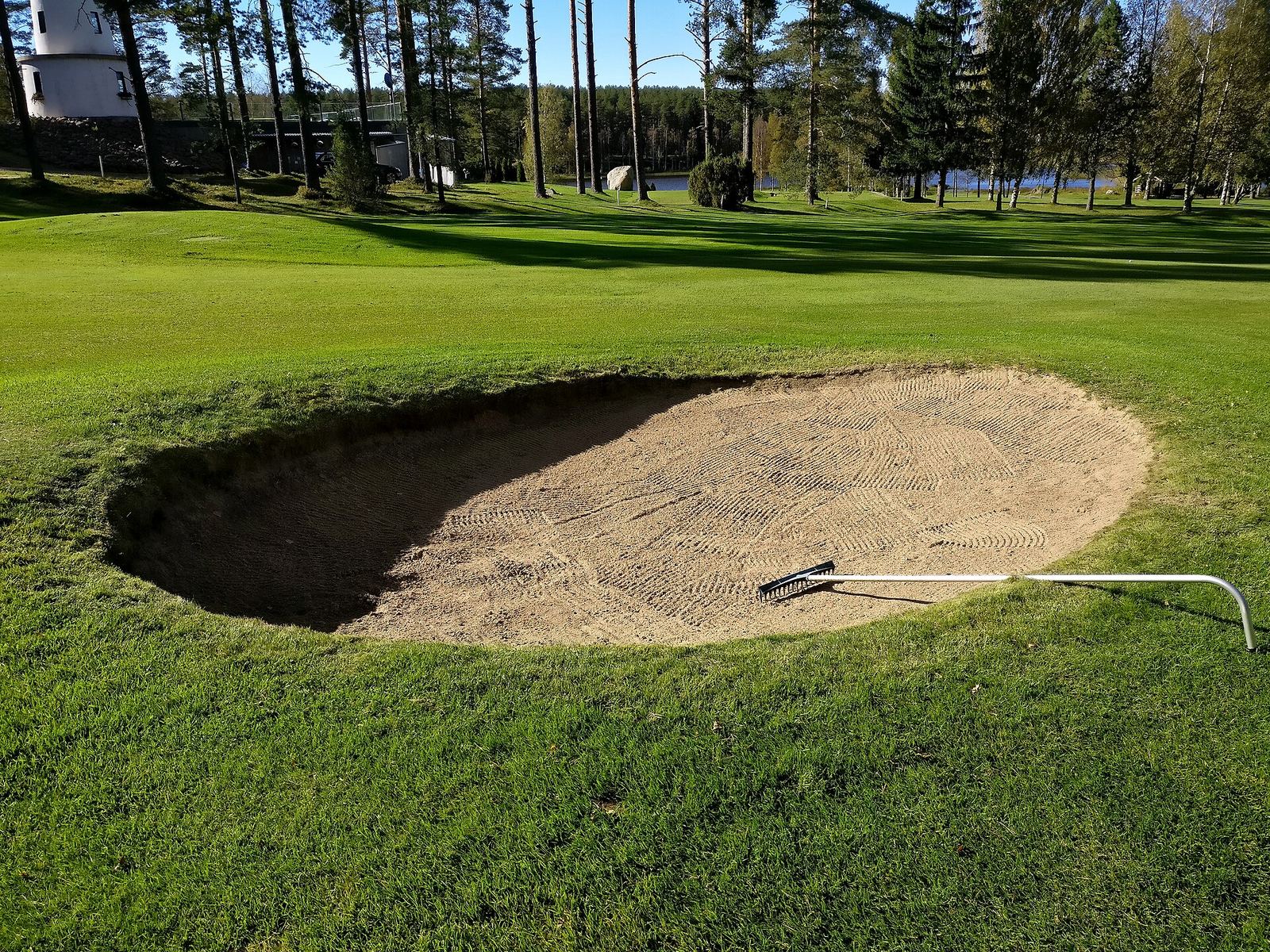
The best hole at Langdon Farms plays around a barn. Not a decorative barn, not a barn shaped clubhouse annex, but the original Langdon barn, built in 1908, which stood on this family farm for the better part of a century before anyone thought about golf here. When the course was designed, the barn was deliberately kept and written into the par 4 eighth hole. Most developers would have bulldozed it in an afternoon and named a subdivision after it. Langdon Farms routed a golf hole around it instead, and that single decision tells you how the whole place thinks.
The setting is Aurora, Oregon, south of Portland, in Marion County farm country. The Langdon family farm was sold to developer OB Sports in 1994, and the club opened in the spring of 1995, a fact worth stating plainly because the course is often misdated to 1993. John Fought and Bob Cupp designed it. Golfweek has ranked it No. 13 among public access courses in Oregon, and it sits comfortably in our Oregon state ranking on the strength of a simple proposition: farm land, kept honest, makes good golf land.
Links touches on farmland
The design mixes links style holes with traditional ones, which on paper sounds like a committee compromise and in practice is the course's range. The links style stretches use the openness of the old farm, ground that lets the ball run and wind that gets a say. The traditional holes tighten things up and ask for the ball to be flown and placed. Par 71, 6,931 yards from the back tees and 5,246 from the forward tees, per Travel Oregon. Those numbers describe a course built for the full spread of public golfers rather than a championship audition, and the course is better for knowing it.
Local reputation points to two stretches. The par 4 fourth gets singled out in guide after guide, and the closing run from 13 to 18 is the scenic heart of the round, the part of the course where the farmland setting pays off hole after hole rather than in one postcard moment. A public course lives and dies on its closing stretch, because that is what a golfer is still thinking about in the parking lot and in the car on the way home. Langdon Farms front loads its charm at the eighth and saves its best scenery for the walk in, which is the right order.
There is a competitive footnote worth keeping. Langdon Farms hosted the local U.S. Open qualifier for several years, and the lowest score shot in that stretch was 67, four under par, per the club's own history. Qualifiers are a useful reality check on a public course. Put good players on it with something at stake and the scoring tells you whether the design has teeth. A low number of 67, not 62, says the course defends itself politely but genuinely.
The family business part
In 2003, brothers Chris and Tom Maletis, who had been original investors in the development, bought the course outright. They run it as a family business under a motto the industry could use more of: Public Only. No membership tier creeping in, no semi private rebrand, no tee times quietly reserved for a class of customer who matters more. Public only, stated as policy, on a course ranked among the state's best public tracks.
That matters to how we score it. We grade the golf first, then the day, then what it costs you and whether you can actually get on. A well designed public course an hour's honesty south of Portland, owned by a family that has now run it for two decades, scores well on every part of that after the first, and respectably on the first itself.
The concession is real: Langdon Farms is not a championship brute, and it does not try to be. At par 71 and under 7,000 yards, elite players will overpower parts of it, and the links elements are a flavor rather than a full commitment, farmland golf with links touches rather than a true links. Golfers chasing Oregon's famous coastal tests are playing a different sport entirely.
But that was never the assignment. The assignment was a public course on a family farm that kept its 1908 barn, holds a qualifier field to 67, and means it when it says public only. Play the eighth around the barn, play the last six through the best of the farm, and you will understand why Oregon golfers keep this place in the rotation long after the resort courses have had their say.