Course Comparisons / New York
National Golf Links of America vs. Sebonack Golf Club: The Southampton Choice
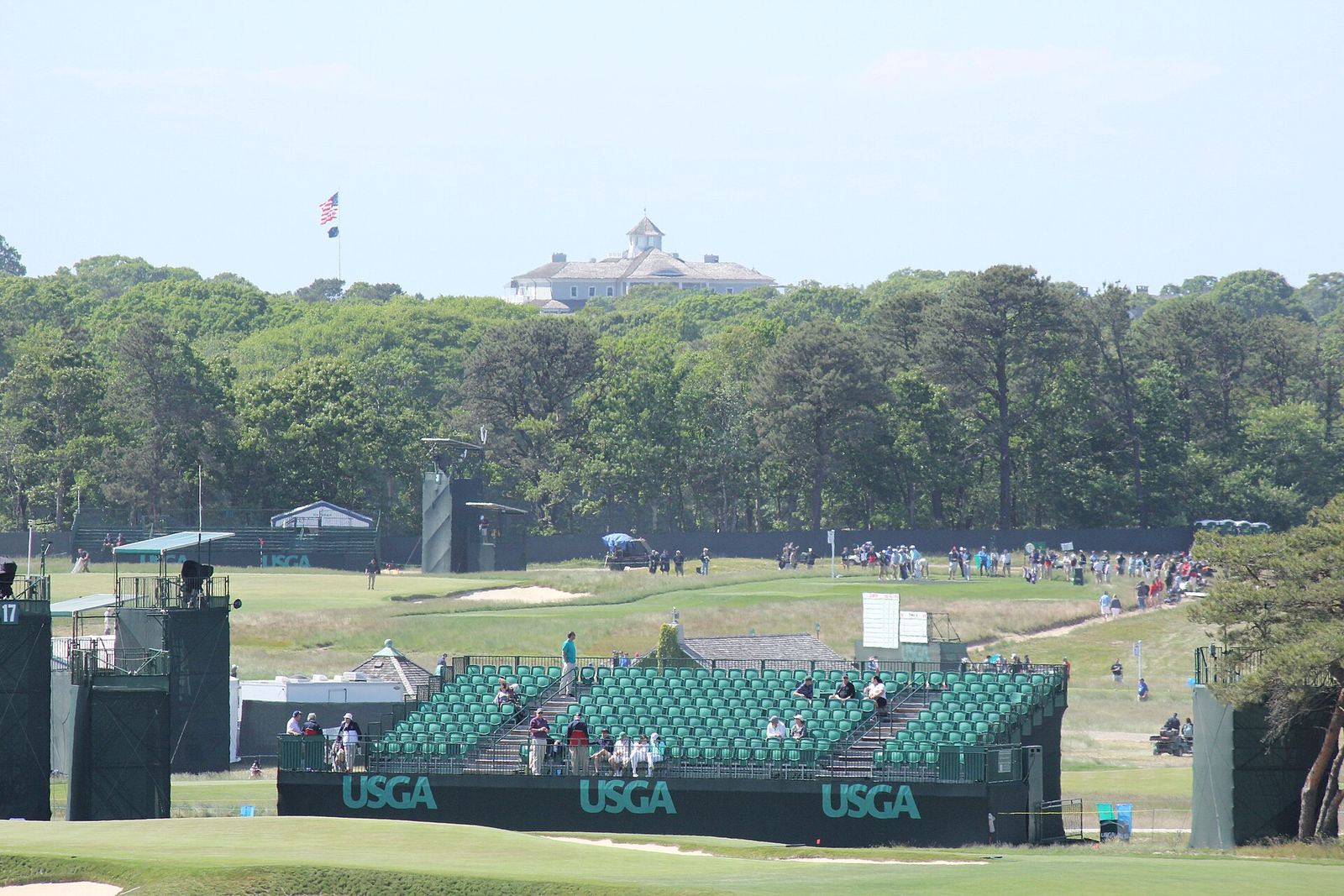
On Sebonac Neck in Southampton, two private clubs sit side by side between Shinnecock Hills and Peconic Bay, and they could hardly disagree more about what a golf course should be. One opened in 1911, built from copies of famous British holes. The other opened in 2006, built by two architects who famously approach the game from opposite ends. If you ever get one invitation to this stretch of Long Island, which one do you take?
National Golf Links of America
Charles Blair Macdonald studied at St. Andrews and came home convinced America needed to learn golf from its source. The National, opened in 1911, is that lesson made ground: template holes including the Redan, the Alps, and the Sahara, patterned on famous British holes, set across 250 acres with views of Peconic Bay and a windmill that has become the club's emblem. It plays par 72 at 6,873 yards, rating 73.6 and slope 137. By modern championship standards that is short. It is also the wrong way to measure it. The National tests angles, wind judgment, and nerve on greens set into classic templates. A Redan does not care what year your driver was made.
The history is not decoration. The first Walker Cup was played here in 1922, and the Walker Cup returned in 2013. A course that hosts an event at its birth and again 91 years later is not surviving on nostalgia. It is still examining the best amateurs in the world on the same questions Macdonald set before the First World War.
Sebonack Golf Club
Sebonack is what happens when money, land, and an unlikely partnership get serious. Owner Michael Pascucci bought the property in 2001 to build a championship course, and the design became a collaboration between Jack Nicklaus and Tom Doak, two men whose names usually appear on opposite sides of an architecture argument. Opened in 2006, it plays par 72 at 7,252 yards per its record, with a course rating of 77.3. That rating is a full four shots above the National's. Sebonack is, by the numbers, the far harder examination.
It has the championship proof. Sebonack hosted the 2013 U.S. Women's Open, the first U.S. Women's Open played on Long Island. Its panoramic views of Great Peconic Bay give it a visual drama the National, lower and more intimate in its templates, does not chase. Where the National asks you to solve a puzzle, Sebonack asks you to survive a test.
The verdict
On the golf, we score it for the National, and it is not especially close as an experience, even while Sebonack wins as a measurement. The National's templates still produce the most interesting decisions in American golf, and its 6,873 yards contain more shots you will remember in a decade than most 7,500 yard courses manage. Doak's influence keeps Sebonack from being a pure Nicklaus slog, and on a calm day with your best game, Sebonack might be the round you brag about. But bragging and remembering are different things.
The concession belongs to Sebonack's defenders, and it is real: if you want to know exactly how your game stands up to a modern championship standard, the 77.3 rating is the honest mirror, and the National will never give you that reading. Pick Sebonack if the test is the point. Pick the National if the golf is.
Both sit at the top of our Southampton ranking and near the top of the New York state list, and both are private in the strictest sense. Estimates for entry at either club run deep into six figures and beyond, strictly estimates, since neither publishes a number. The choice, for nearly everyone, stays hypothetical. It is still the best argument on Long Island: 1911 against 2006, templates against scale, memory against measurement, with the bay glittering behind both.