Course Comparisons / New York
National Golf Links of America vs. Shinnecock Hills Golf Club: The Southampton Choice
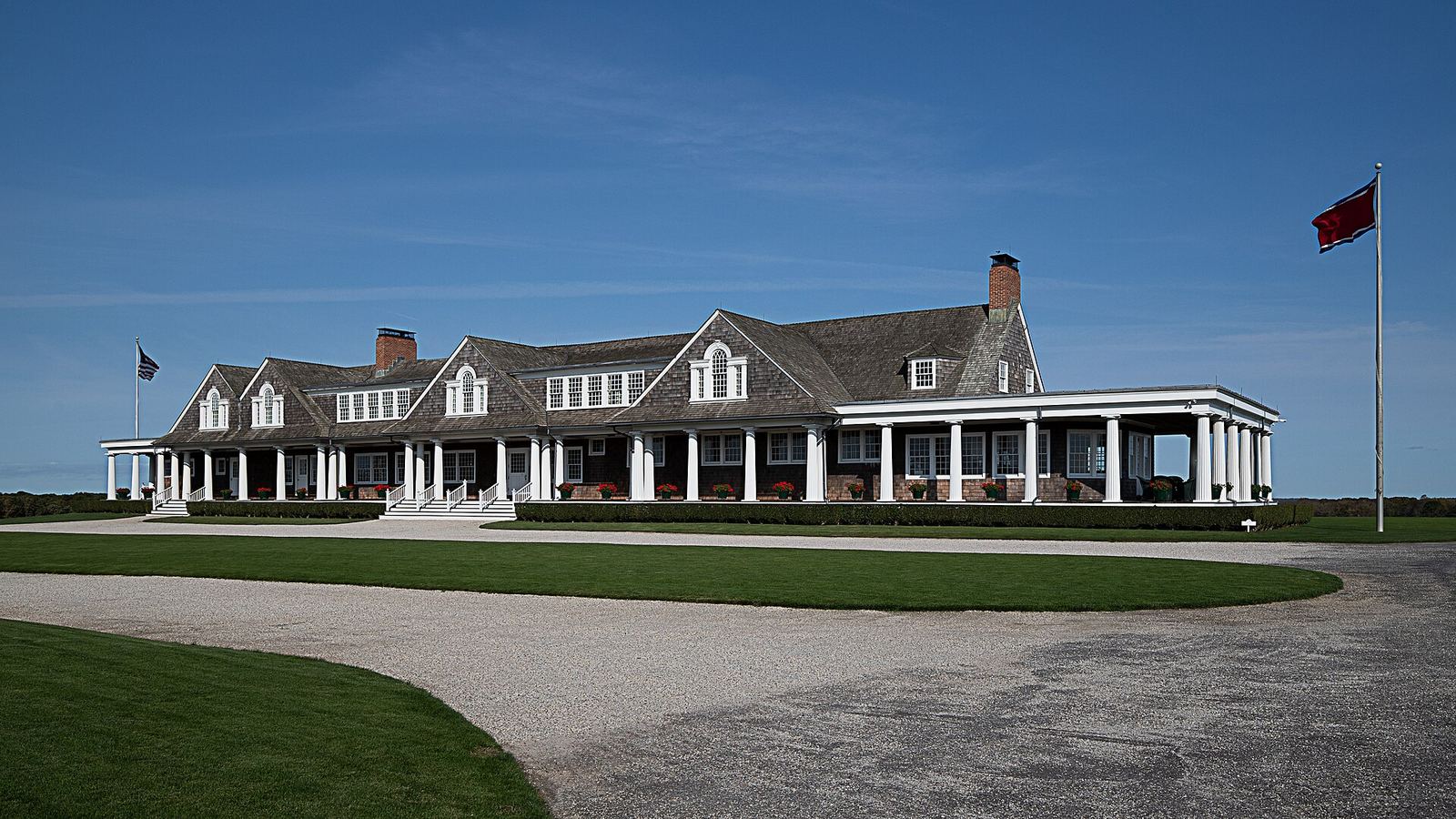
Two of the best courses in America sit next to each other on Sebonac Neck in Southampton, and they could not disagree more about what golf is. One is a museum of great holes copied from Britain by a man who studied at St. Andrews. The other is an original American championship test that has hosted the U.S. Open across three centuries of golf equipment. If you get one invitation in Southampton, and golfers have argued about this for a hundred years, which one do you take?
We take them in order in our Southampton town ranking and both sit high in the full New York state ranking. The head to head is closer than the trophy cases suggest.
National Golf Links of America: the ideas course
Charles Blair Macdonald opened the National in 1911, after studying at St. Andrews and deciding that America needed the great British holes on its own soil. So he built them: a Redan, an Alps, a Sahara, template holes with names that architecture golfers still use as vocabulary. The course plays par 72 at 6,873 yards on 250 acres, rated 73.6 with a slope of 137, with views of Peconic Bay and a windmill that has become shorthand for the place in photographs.
It hosted the first Walker Cup in 1922 and the Walker Cup again in 2013, ninety one years apart, which is a neat summary of its standing. Events do not define it, though. Ideas define it. Nearly every architect since has either borrowed from Macdonald's templates or argued against them, and playing the National is the closest American golf gets to reading the source text. The golf is strategic in the old sense: the question on each hole is where to place the ball, not merely how far to hit it.
Concede the weakness honestly. At 6,873 yards, the National cannot examine a modern elite player the way a U.S. Open course must, and it has never tried to. Its defense is angle, wind off Peconic Bay, and greens that make the wrong position useless. For a scratch player having a good day, that defense can be beaten. The National's fans would call that charm. Its critics call it a ceiling.
Shinnecock Hills: the championship course
Shinnecock's current course, designed by William S. Flynn with Howard C. Toomey, opened in 1931 on ground where the club had existed since 1891. The club is one of America's oldest, a founding member of the USGA, and the Open record runs 1896, 1986, 1995, 2004, and 2018, with a sixth Open set for 2026. Champions there include Raymond Floyd, Corey Pavin, Retief Goosen, and Brooks Koepka. That spread of winners is itself an argument: bombers and grinders have both won here, which means the course tests the whole game instead of one skill.
It plays par 70 at 7,440 yards. The 7th is a Redan par 3, proof that Flynn could use a template inside an original design without copying anybody's homework, and the 18th is named Home. Coore and Crenshaw restored Flynn's intent starting in 2012, working from 1938 aerial photographs, which means the Shinnecock of the 2026 Open is closer to the 1931 course than the version in between. Old bones, recovered on purpose.
Shinnecock's honest weakness is the mirror of the National's. It can be a grind. An Open setup on a windy week asks questions a recreational golfer, even a good one, may not enjoy answering for five hours. The National wants to be played again tomorrow. Shinnecock wants your respect first.
The verdict
Pick Shinnecock if you get one round. It is the more complete test, the stronger championship record, and the course that still examines the best players in the world on its own terms. Pick the National if your interest is architecture itself, or if the invitation is for two days and joy matters as much as examination. Plenty of serious golfers, given a full weekend on Sebonac Neck, would play the National twice and Shinnecock once, and we would not argue hard.
But one round, one answer: Shinnecock, by a hole or two, on the strength of a test that has sorted Floyd, Pavin, Goosen, and Koepka without ever needing to explain itself.