Course Comparisons / New York
Oak Hill Country Club East Course vs. Oak Hill Country Club West Course: The Pittsford Choice
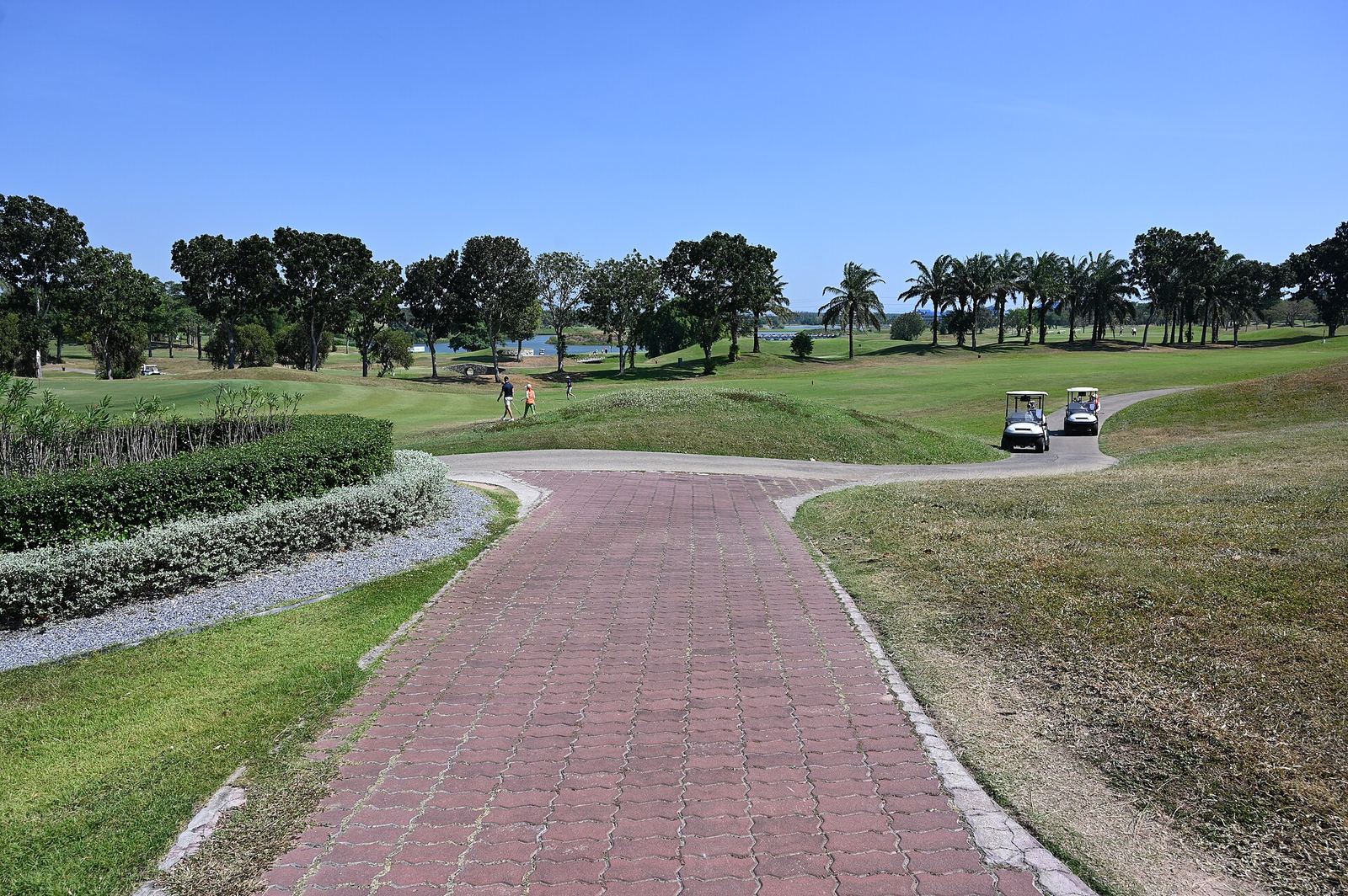
Same clubhouse, same Pittsford ground, same architect. Oak Hill Country Club has two Donald Ross courses, and one of them has hosted six major championships while the other has spent a century as the answer to a trivia question. The interesting argument is not which course is greater. Everyone knows. The interesting argument is which course a member should actually play on a Saturday, and whether the famous one earns its fame every single round.
Oak Hill East Course
Donald Ross designed the East, opened in 1926. It plays par 70 at 7,394 yards, tree lined, private, and built to a championship scale that has never really left it. The PGA Championship has been held here in 1980, 2003, 2013, and 2023. Add the wider record from its file: six major championships in total and the 1995 Ryder Cup. Curtis Strange won his second straight U.S. Open here in 1989, one of the great title defenses in the game's history, on a course that gave him almost nothing for free.
Andrew Green led a 2019 restoration back toward the original Ross vision, which matters because championship courses accumulate changes the way airports accumulate terminals, each one sensible, the sum of them muddled. The East that hosted the 2023 PGA was deliberately Ross again: his corridors, his scale, his intent, stretched for modern length. That is the version members now play, a major venue that also happens to be their home course.
Oak Hill West Course
The West is the second course at Oak Hill, also designed by Donald Ross, who designed both courses at the club. It is ranked No. 156 on Golfweek's classic courses list. Read that again. The second course, the one without a major, sits comfortably inside a national classic ranking that most clubs' only courses never touch. That is the depth of Ross work on this one property in Monroe County.
What the West offers, by role and reputation, is Ross without the championship armor. No 7,394 yard card, no tournament tree program pressing in on every fairway, no sense that the course is saving itself for the next PGA. Members at two course classics clubs tend to split on exactly this line. The famous course validates the club. The other course validates the membership, week after week, because it is the one that fits an ordinary good round of golf.
The verdict
The East wins the comparison on every measure we score: architecture under championship pressure, history, and the sheer weight of 1989, 1995, and four PGAs. It belongs near the top of the New York ranking and the West, for all its quality, does not displace it. If a guest gets one Oak Hill round, it is the East, full stop. You play where Strange defended a U.S. Open.
The concession goes to the West without hesitation, because this is where head to heads at single clubs get honest. A course ranked 156th among classics nationally would be the crown of almost any other club in upstate New York. The West loses this comparison only because its sibling is one of the dozen most decorated championship venues in America. Some members, playing 60 rounds a year, will quietly log more of them on the West, and their reasoning is sound: Ross strategy at a human scale beats Ross strategy at 7,394 yards for a 12 handicap in May wind.
Two Ross courses, one property, and the lesser one still clears a national bar. That is not a weakness in the comparison. That is the whole story of Oak Hill.
The pair anchors our Rochester town ranking, where the rest of the Pittsford and Rochester bench is weighed.