Course Profiles / New York
Sebonack Golf Club: A Course Profile
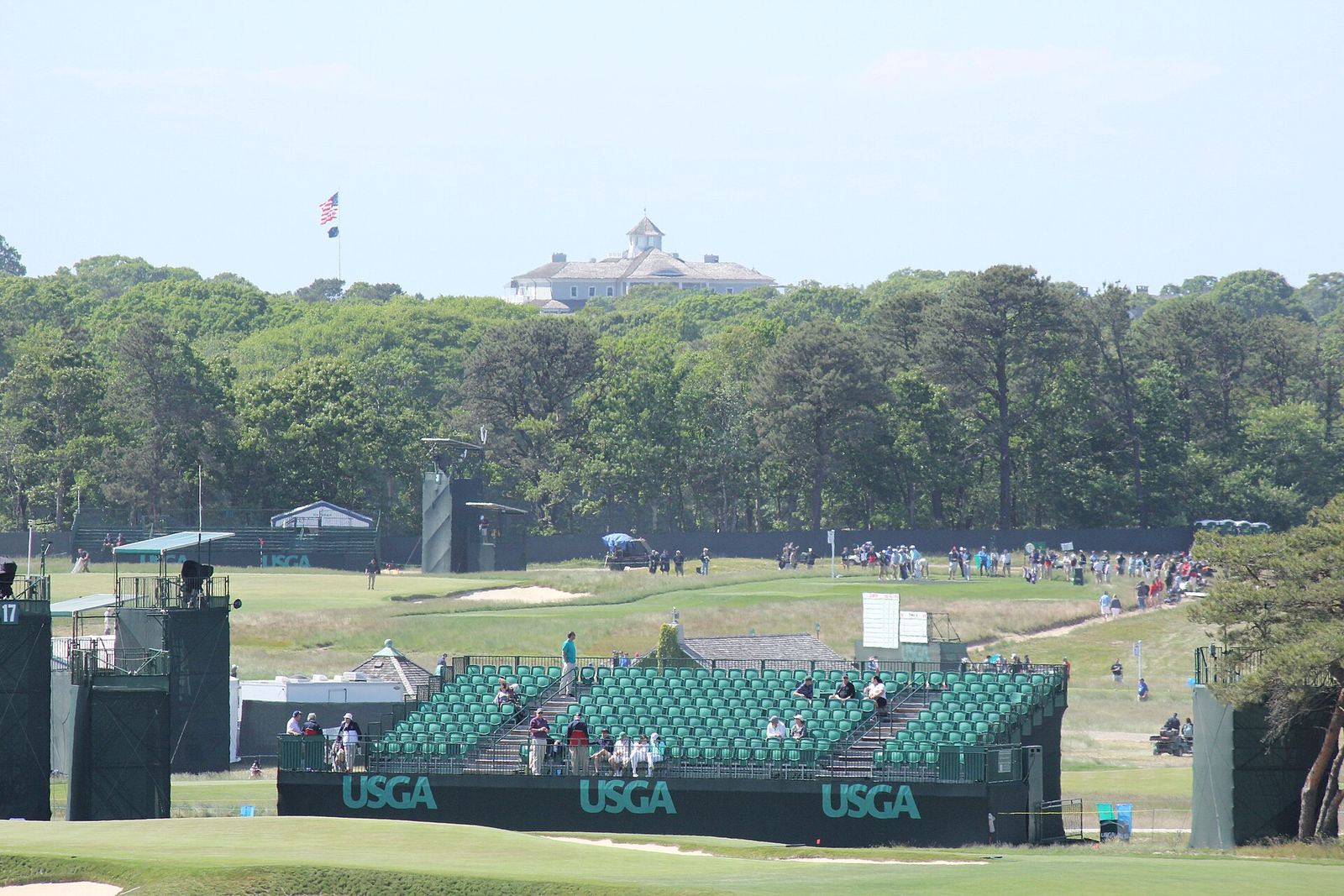
In 2013 the U.S. Women's Open came to Long Island for the first time, and it did not go to Shinnecock or National Golf Links. It went to the new course next door, the one that had been open seven years. That tells you most of what you need to know about Sebonack. It was built in the most scrutinized neighborhood in American golf, between two courses that sit near the top of every serious ranking ever published, and within a decade it was holding a national championship of its own.
The pairing behind it explains the tension in the design. Jack Nicklaus and Tom Doak do not naturally build the same golf course. Nicklaus, across his career, favored the aerial game, demanding carries, and greens that ask for a high, soft shot played exactly the right distance. Doak built his reputation on the opposite instinct, ground game first, width, contour, and options for the player who would rather bounce one in. Owner Michael Pascucci, who bought the property in 2001 to build a championship course, put the two of them on the same piece of ground in Southampton and let the argument play out over 18 holes.
What the golf asks
The scorecard sets the terms early. Par 72, just over 7,200 yards from the back, with a course rating of 77.3. That rating is the honest part of the number. Sebonack plays harder than its yardage because the ground sits above Great Peconic Bay, and the panoramic views the brochures lead with come with the wind that makes them possible. A course this exposed does not defend itself with trees. It defends itself with angle and air, with greens positioned so the safe side of the fairway is rarely the side the wind wants you to play from.
The Nicklaus influence shows in the examination. There are shots here that simply have to be carried, and carried a specific number, because the alternative is a bunker or a falloff. The Doak influence shows in what happens around those demands. The surfaces move. The recoveries are interesting rather than merely punitive. A missed green leaves a question worth solving instead of a penalty already served, and that balance, brutality at full length balanced by imagination around the greens, is why the course holds up to repeated play in a way a pure Nicklaus test sometimes does not.
It also explains the Women's Open fit. A course that only rewards power would have been the wrong stage. Sebonack rewards the player who controls trajectory in wind, who can flight a ball down when the bay breeze is up and still hold a green when the shot calls for height. That is a complete examination, and the USGA tends to find those.
The neighborhood problem
Every course gets judged against something, and Sebonack gets judged against the two hardest comparisons in the country. Shinnecock Hills sits adjacent, National Golf Links of America sits adjacent, and a golfer standing on Sebonack's ground can feel both of them over the fence. Our Southampton town ranking has to sort exactly that pile, and it is the toughest town sort on the site.
The fair concession is that Sebonack does not have what its neighbors have and never will. It opened in 2006. It has no century of championships, no Macdonald templates, no windmill. History is the one design feature money cannot accelerate, and pretending otherwise would be silly. What it has instead is the strongest modern design pedigree on Long Island and a championship already banked. In our New York state ranking, that combination keeps it in the conversation with courses three and four times its age, which for a course that opened when some of its members' drivers were already in the bag is a genuine achievement.
Access is the other plain fact. Sebonack is private, fully private, and the realistic routes onto it are membership and invitation. Estimates put initiation well into six figures, and figures that circulate should be treated as estimates, because the club does not publish them. For most golfers this is a course to study rather than to play, a window into what happens when two opposed design philosophies are forced to share one great site on the bay.
That is the right way to hold it. Sebonack is not a curiosity and it is not a rich man's placeholder between two legends. It is a hard, windy, thoughtfully argued championship course that earned a U.S. Women's Open before it turned ten. The neighbors still win the history argument. On the golf alone, on a blustery afternoon above Great Peconic Bay, the gap is smaller than the founding dates suggest.