Course Comparisons / Florida
Shingle Creek Golf Club vs. Eagle Creek Golf Club: The Orlando Choice
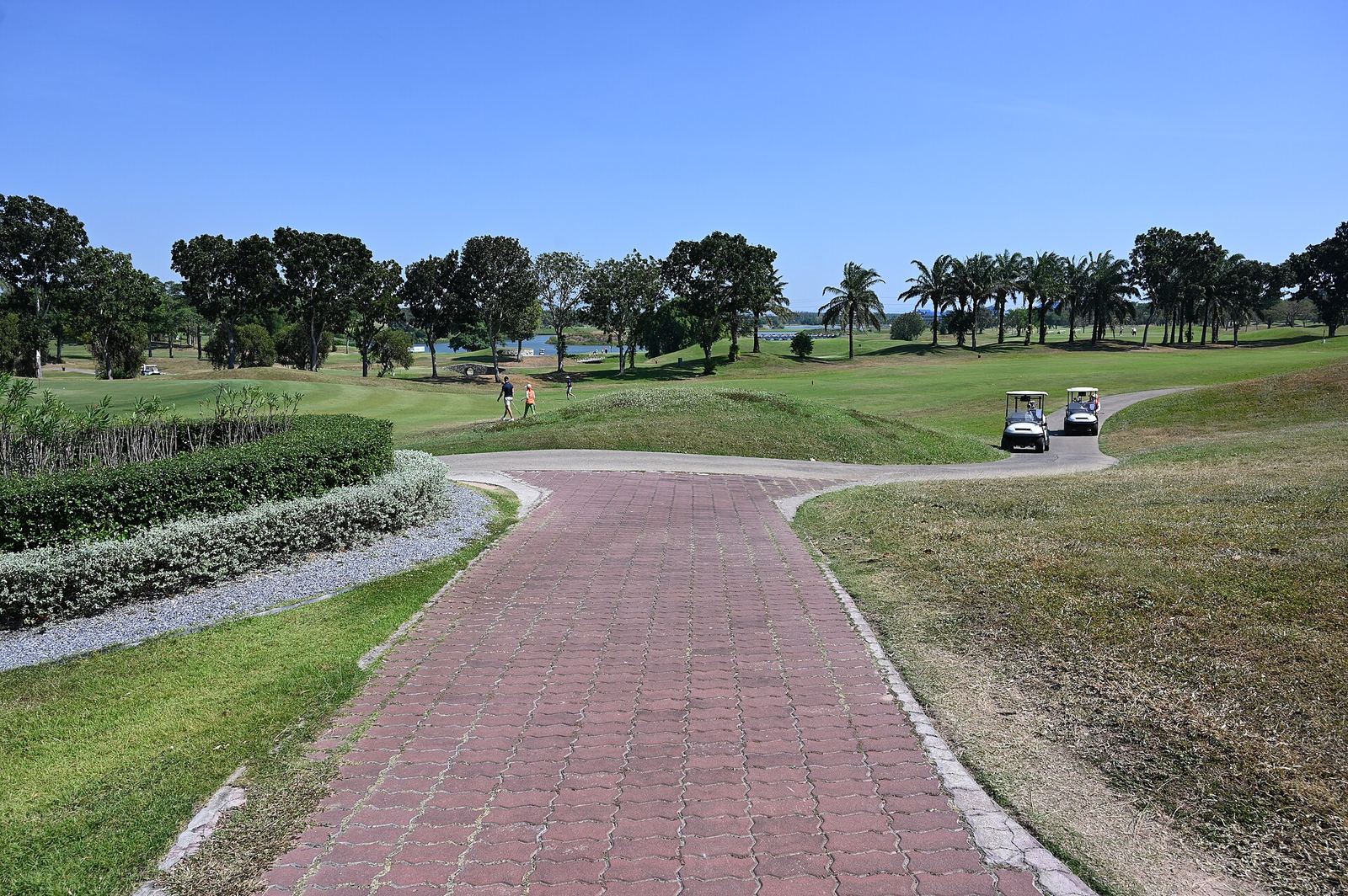
Orlando has more resort and public golf per mile than almost any city in America, and most of it blurs together: flat, watery, pleasant, forgettable. Shingle Creek and Eagle Creek are two of the better answers the city offers, and they got there by opposite routes. Shingle Creek is a resort course at Rosen Shingle Creek on the convention corridor, opened in 2003 and redesigned by the Arnold Palmer Design Company in 2016. Eagle Creek is a public course near Lake Nona, a Ron Garl and Howard Swan design from 2004 with Scottish style sod bunkers and a scorecard oddity no other public course in its area can claim. Both play over 7,100 yards. After that, they diverge.
Shingle Creek: Palmer's second draft
The most interesting fact about Shingle Creek is that it got redesigned at all. David Harman's original opened in 2003, and in 2016 Thad Layton of the Arnold Palmer Design Company reworked it, adding three entirely new holes and leaning into large greens and Palmer style risk and reward par 5s. Resort courses on the convention corridor usually coast. This one spent money to get better, and hosts collegiate and charity events as a working part of its calendar.
The golf is flat, water heavy Orlando parkland, stated without apology in its own descriptions, and the water is not decorative. It comes into play on 15 holes, along the headwaters of the Everglades, which gives the flatness a geography: this is golf at the top of a watershed, and the creeks and ponds are the land's actual drainage, not a designer's water feature budget. Par 72, 7,213 yards from the black tees. The large greens are the Palmer signature that matters most for a resort field. Big targets keep a mixed group moving, and the risk and reward par 5s give the better players in a corporate or charity field something to swing at. Resort golf that serves both audiences at once is rarer than it looks.
Eagle Creek: the par 73 outlier
Eagle Creek's headline is arithmetic. Par 73, 7,198 yards, the only par 73 course among the Lake Nona area publics, with a front nine playing par 36 and a back nine par 37. An extra par 5 changes a round's rhythm more than golfers expect. It is one more genuine scoring chance, one more hole where a long hitter can separate, and it makes comparing your card to a standard par 72 round a small act of translation.
The design language differs too. Garl and Swan gave Eagle Creek Scottish style sod bunkers, a visual and strategic accent almost nobody else in central Florida bothers with, and the course has hosted PGA Tour Q School stages, which is a real credential for a public layout. Q School does not visit courses that cannot examine a professional's game. Public access near Lake Nona also puts Eagle Creek in a different daily rhythm from the convention corridor: more local play, more repeat golfers, less of the one and done resort traffic. See both in context in our Orlando ranking and statewide in the full Florida state ranking.
The verdict
On the golf, this is close, and the honest edge goes to Eagle Creek by a half step: the par 73 quirk is real variety, the sod bunkers give it a look of its own, and Q School history says the test holds up under professional pressure. On the day, Shingle Creek answers with the full resort apparatus, a redesigned Palmer course, big greens that flatter a group, and water on 15 holes keeping every round honest.
So choose by trip. A golf first visitor or a local building a rotation should take Eagle Creek, the more distinctive public course. A golfer in Orlando for a convention, a charity day or a resort stay should take Shingle Creek and enjoy a course that was improved when it could have coasted. The concession belongs to Shingle Creek's side of the ledger: in a city of interchangeable flat and watery courses, spending real money in 2016 to add three new holes and a Palmer identity is the move of a course that intends to be chosen, not just booked. Plenty of Orlando golf cannot say that.