Course Profiles / New York
Shinnecock Hills Golf Club: A Course Profile
The 7th hole at Shinnecock Hills is a Redan, the par 3 template that asks for a shot shaped into a green that runs away from you, and in a Long Island wind it asks the question at championship volume. Golfers have been failing to answer it at U.S. Opens since 1896. Shinnecock was founded in 1891, is one of America's oldest clubs and a founding member of the USGA, and its championship roll is the simplest argument in American golf: Opens in 1896, 1986, 1995, 2004, and 2018, a sixth in 2026, won by players of the caliber of Raymond Floyd, Corey Pavin, Retief Goosen, and Brooks Koepka.
William S. Flynn, working with Howard C. Toomey, built the course that opened in 1931 in Southampton, in Suffolk County. It plays par 70 at 7,440 yards. Those numbers, on rolling ground above the Atlantic side of the island, with wind as a full member of the design team, produce the hardest fair test in American championship golf. Pavin won in 1995 with one of the great closing shots ever hit, and the course still presents that same demand today: control the ball in the wind, on the ground and in the air, for 18 holes, or be found out.
Flynn's intent, restored
From 2012, Coore and Crenshaw restored the course toward Flynn's intent using 1938 aerial photographs. Note the discipline in that sentence. Two of the most celebrated designers alive took a masterpiece and did archival work, widening back to what Flynn drew rather than what decades of narrowing had made of it. The restoration trusts the original architecture, and the 2018 Open, won by Koepka, played over a course that was both a 1931 design and a modern championship test at once.
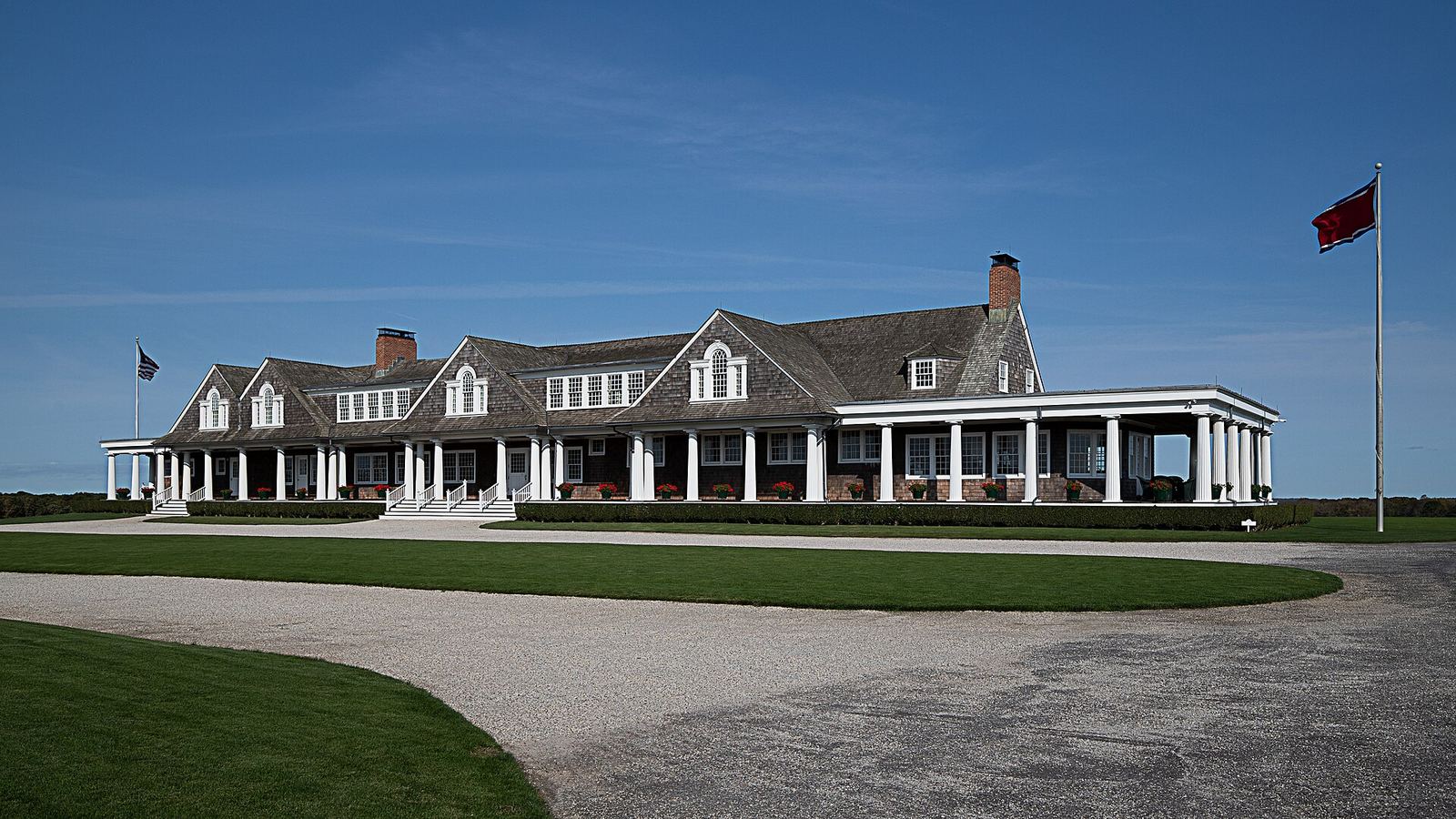
The 18th is named Home, and the name suits a finishing hole that brings you back toward one of the most recognizable clubhouses in golf. Everything about Shinnecock is in proportion: the history is enormous and the presentation is quiet. There is no resort, no public tee time, no content strategy. It is private in the complete sense, and costs, never published, belong only in the highest labeled estimate tier. We place it at the top of the best golf courses in Southampton and at the sharp end of the 5 best golf courses in New York.
Par 70 is part of the severity. At most championship courses the par 5s are where a field breathes, birdies gathered against the day. Shinnecock offers fewer of those breaths, and at 7,440 yards its par 4s ask for long, controlled shots into Flynn greens that reject anything arriving hot or from the wrong side. Floyd, Pavin, Goosen, and Koepka are different kinds of players, a shotmaker, a grinder, a ball striker of rare calm, and a power player, and the course crowned all four. A test that only suits one style is a quiz with one answer. Shinnecock's questions change with the wind, which is why its champion list reads like a cross section of how golf can be played well.
The honest concession is the one its critics always make, and it is not nothing. In the wrong wind and the wrong setup, as in stretches of 2004 and 2018, Shinnecock can tip from severe to unreasonable, greens at the edge of holding a shot played exactly as intended. A championship course that never risks that line would also never produce what this one produces at its best. The line is the design.
End where the round ends. Home, the 18th, wind off the water, a Flynn green waiting for a ball flighted rather than forced. Five Opens have finished on that hole and a sixth is coming. American golf has no sterner walk in, and none better.