Architect Rankings
The Best A.W. Tillinghast Golf Courses in America
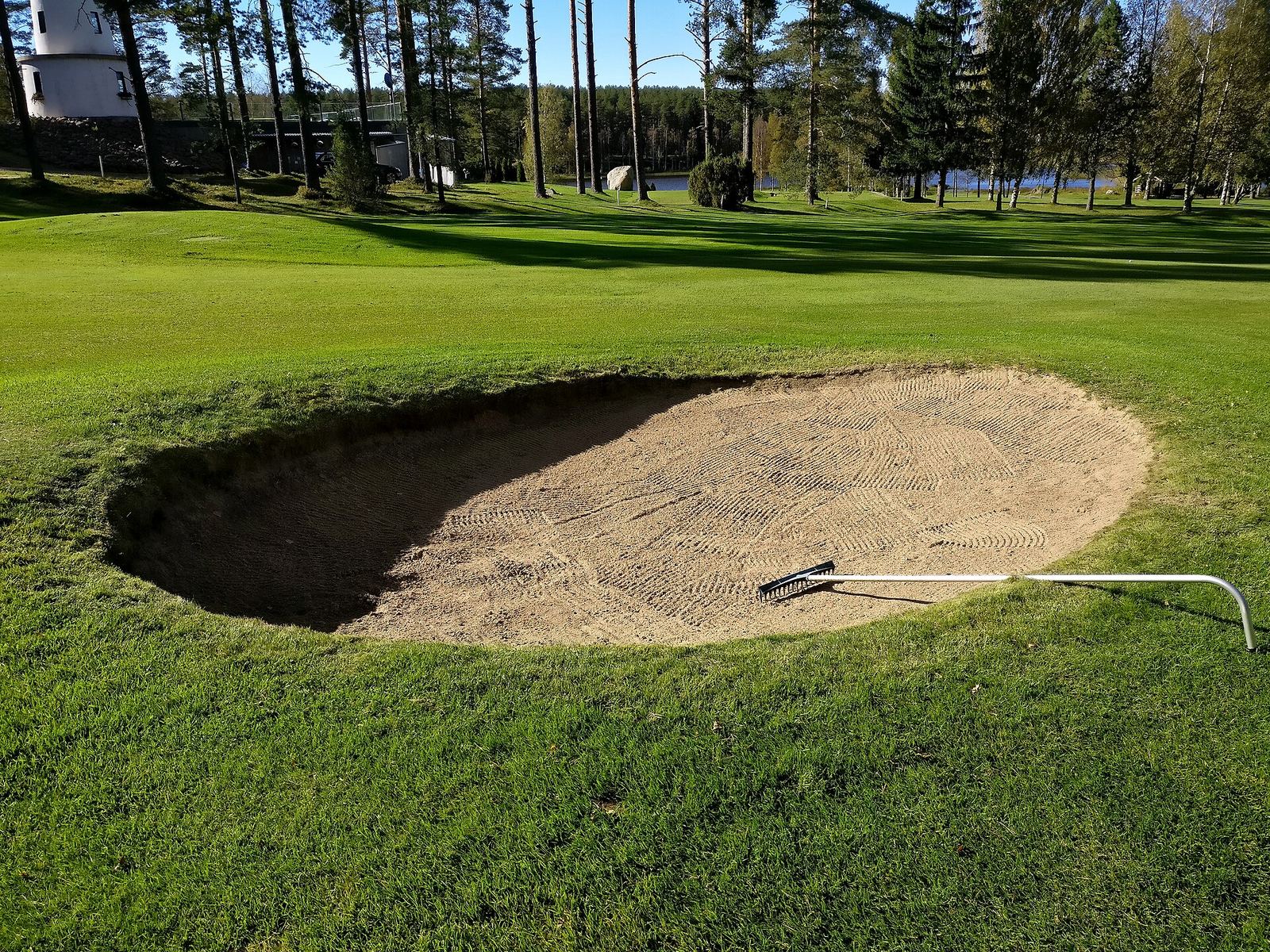
Forty four courses in our dataset carry A.W. Tillinghast's name, across 17 states, and the range is the first thing to understand about him. He built a municipal course in Farmingdale that hosts majors and a private club in Scarsdale most golfers will never see. He worked in Texas, Oklahoma, Kansas, and California with the same hand he used in New Jersey. The idea of golf underneath it all stays consistent: greens that make you think, par 5s with a genuine decision built in, and bunkering that argues with your intended line instead of decorating the edges of it. These are the best of them. Trips between them run through our Farmingdale ranking, the Mamaroneck ranking, and the Mission Hills ranking.
1Winged Foot Golf Club West Course
Mamaroneck, New York, private, opened 1923. Par 72 at 7,477 yards. Six time U.S. Open host, in 1929, 1959, 1974, 1984, 2006, and 2020, plus the PGA Championship in 1997. The 1974 U.S. Open is known as the Massacre at Winged Foot, won by Hale Irwin at 7 over par. Bobby Jones won the 1929 U.S. Open in a 36 hole playoff by 23 strokes, the largest major playoff margin. Gil Hanse's restoration expanded the greens by 23.8 percent using 1929 aerial photos. The West is the hardest sustained examination Tillinghast ever built, and its greens remain the standard every other course on this list gets measured against.
2Bethpage Black Course
Farmingdale, New York, public, opened 1936, designed with Joseph H. Burbeck. Par 71 at 7,468 yards, slope 155, rating 77.5. It hosted the U.S. Open in 2002 and 2009, the PGA Championship in 2019, and the Ryder Cup in 2025. Tiger Woods won the 2002 U.S. Open as the only player under par. Brooks Koepka shot the course record 63 in 2019. It is a municipal course with a warning sign at the first tee and overnight camping for tee times, called the People's Country Club. A public course at No. 2 on a Tillinghast list is not a gesture. It is the architecture, available to anyone willing to sleep in a car for it.
3Baltusrol Lower Course
Springfield, New Jersey, private, opened 1922 as part of the first contiguous 36 hole dual courses project in the United States. It hosted U.S. Opens in 1954, 1967, 1980, and 1993 on the Lower, with Jack Nicklaus winning in 1967 and 1980. The PGA Championship came in 2005, won by Phil Mickelson, and 2016, won by Jimmy Walker, plus the KPMG Women's PGA in 2023. The famous par 3 fourth plays over a pond, where Robert Trent Jones made an ace in 1954 to prove the hole was fair after lengthening it. Gil Hanse restored the Lower, reopening in 2021, with the 2029 PGA Championship scheduled. Baltusrol was named a National Historic Landmark in 2014.
4Somerset Hills Country Club
Bernardsville, New Jersey, private. Tillinghast designed it from 1916 to 1918, when he was about 40, before Winged Foot and Baltusrol. The club, founded in 1899, moved to estate land bought in 1916. The front nine crosses open former racetrack meadow and the back nine enters woods with natural water. The Redan par 3 second is its most cited template hole, with a steep back left slope. Golf Digest ranks it No. 3 in New Jersey and GOLF Magazine No. 51 in the world for 2025-26. A long restoration over about 25 years returned Tillinghast's features, and the club keeps the member tradition of no tee times. Purists often put Somerset Hills first for charm. We put it fourth only because the three above it have proved themselves against the best fields in golf.
5Baltimore Country Club East Course
Lutherville, Maryland, private, opened September 1926 and instantly recognized as a masterpiece. Its full record includes the 1928 PGA Championship, the 1932 U.S. Amateur, the tied 1965 Walker Cup, and the 1988 U.S. Women's Open won by Liselotte Neumann. Keith Foster's 2015 restoration returned greens, bunkers, and corridors to Tillinghast's intent. It is famous for its par 3 collection and two named par 5s, the barn hole 6th and the great hazard 14th. Golf Digest ranks it No. 2 in Maryland and No. 112 in the United States for 2025-26.
6Quaker Ridge Golf Club
Scarsdale, New York, private, opened 1926. Par 70 at 7,008 yards. It hosted the 1997 Walker Cup. Quaker Ridge lives in Winged Foot's neighborhood and shadow, a few miles apart in Westchester, and generations of good judges have argued it is the more enjoyable everyday test of the two. We will not go that far, but a Tillinghast that sparks that argument against the West Course belongs in any top eight.
7Kansas City Country Club
Mission Hills, Kansas, private, opened 1926. The club was founded May 1, 1896, played its first thirty years at what is now Loose Park in Kansas City, Missouri, on a handshake lease of one dollar a year, then moved a mile west and hired Tillinghast on December 10, 1925; a $2,500 receipt for his services survives. It is Tom Watson's home course, where he learned the game from club pro Stan Thirsk and holds the professional course record of 60. Andrew Green's renovation, finished in 2026, restored Tillinghast's intent. Par 70 at 6,822 yards, rating 74.4, slope 137. This is the best Tillinghast in the interior of the country, and it is not close.
8Fenway Golf Club
Scarsdale, New York, private, opened 1924. Par 70 at 6,724 yards, with challenging greens and classic Tillinghast features, restored by Gil Hanse. Fenway gets the final spot over excellent company, including Fresh Meadow, which hosted the 1932 PGA Championship, because its greens make the purest Tillinghast argument in miniature.
The concession every Tillinghast ranking owes: his name also got attached, stretched, and renovated across so many courses that attribution purists can argue about a dozen of the 44 in our dataset, and some of his work has dated where clubs let the trees win for fifty years. At his best, though, nobody in his era set a harder, fairer set of questions on a green. Winged Foot West at 7 over par in 1974 is still the answer echoing back.