Architect Rankings
The Best Arnold Palmer Golf Courses in America
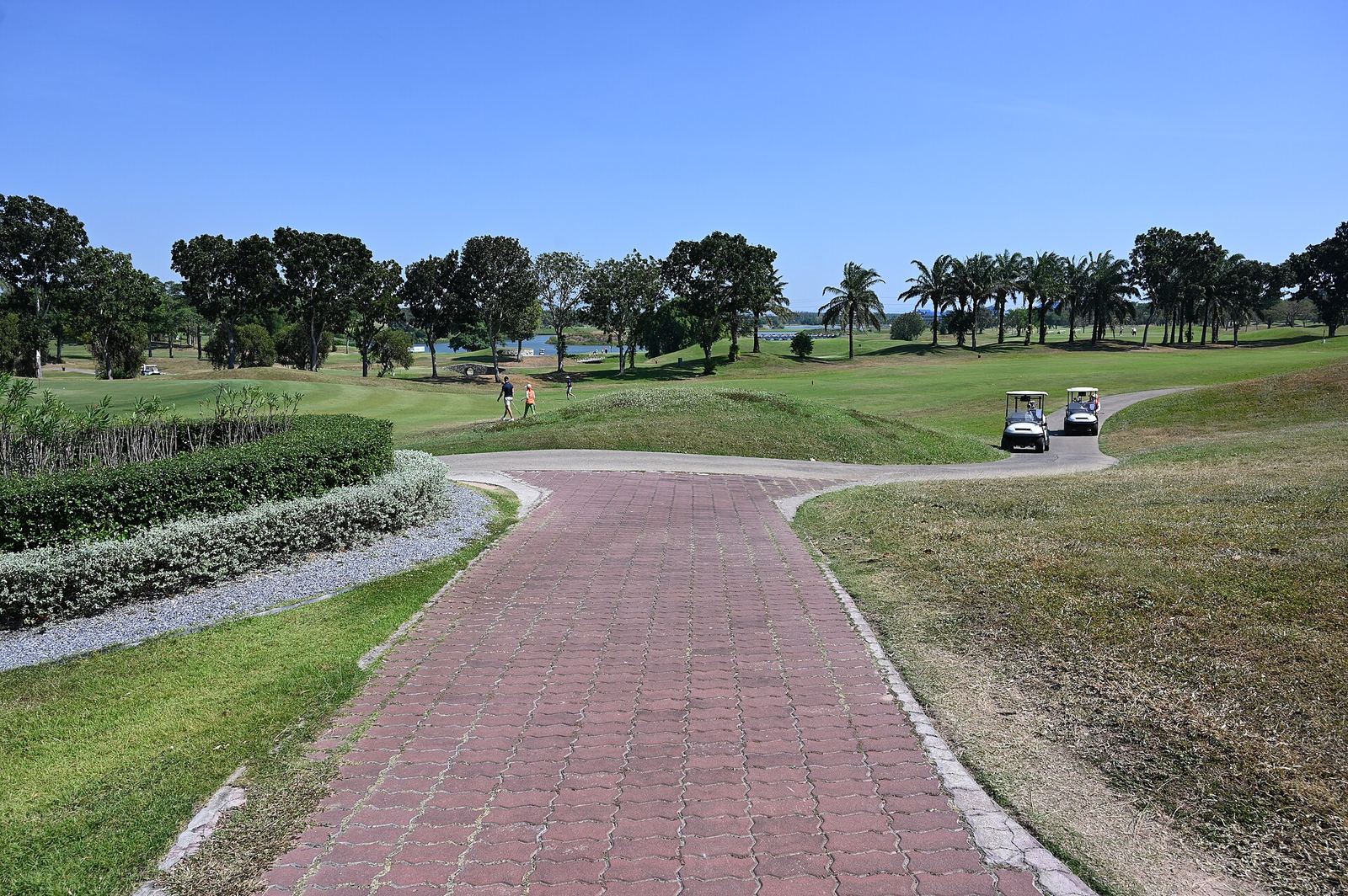
Arnold Palmer's name sits on 100 courses in our dataset, across 35 states, and the honest surprise in his design career is how much of it was playable by ordinary golfers. Palmer built private clubs, yes, but he also built municipals, resort courses, and public tracks by the dozen, golf meant to be booked rather than admired from outside a gate. His design idea was the one he played with: give the golfer a shot worth attempting, price the miss fairly, and let the bold player find out. The seven below are drawn from the full records in our dataset, and they reward that idea at its best. His Gulf Coast work anchors the best golf courses in Gulf Shores, and his California courses run through the best golf courses in Half Moon Bay and the best golf courses in La Quinta.
1SilverRock Resort
A municipal course that stretches to 7,578 yards and hosted the PGA Tour's Bob Hope Classic from 2008 to 2011. Sit with how unusual that is. SilverRock is owned by the City of La Quinta, opened in 2005, and for four years the Tour played a city owned Palmer course in the Coachella Valley. The golf explains it. A canal dissects the 10th, 12th, and 15th holes, the par 5 seventh is wet on all three shots, and several holes run right against the rocky ledges of the Santa Rosa Mountains. It remains one of the premier public courses in the valley after the Tour's departure, and it is the strongest proof in this dataset that Palmer's populism was not a pose.
2Tradition Golf Club
Palmer kept a home at Tradition in La Quinta and treated it as his west coast base, and the course plays like a man's personal answer to desert golf. Opened in 1997 with Ed Seay, par 72 at 6,915 yards, on land that was the Hacienda del Gato ranch, a getaway for Clark Gable, Katharine Hepburn, and Presidents Eisenhower and Kennedy. The par 4 17th drops more than 200 feet from tee to fairway. Membership is capped around 250, by invitation, with no tee times, and the bunkers are filled with white crushed marble. The most private course on this list, and the most Palmer of them.
3Half Moon Bay Golf Links, Old Course
Palmer and Francis Duane opened the Old Course in 1973, a parkland layout through the Half Moon Bay community that saves its drama for the end. The closing holes climb to the Pacific bluffs, finishing at the 405 yard par 4 18th that runs along the cliffs, its green in front of the Ritz-Carlton's outdoor fire pits, where guests watch golfers finish. A bagpiper plays at sundown. Resort courses manufacture moments like this in brochures. This one, built in 1973, simply has them, and the course and its Ocean sibling regularly host U.S. Open qualifying.
4Deacons Lodge
Palmer named this one for his father, Deacon Palmer, and opened it in May 1999 by playing the back nine in an exhibition with Minnesota governor Jesse Ventura. It is built on 499 acres of hardwood forest in Breezy Point with no housing to compromise the design, rambling through sandy soil and sprawling waste bunkers around Shaffer, Lynch, and Douglas Lakes. Par 72 at about 6,964 yards, ranked among America's Top 100 by Golf Digest, with the 433 yard par 4 5th around a lake described by some as the best par 4 in Minnesota. The most personal course Palmer built, and it plays like it.
5Tournament Club of Iowa
Palmer and Ed Seay built the Tournament Club of Iowa in Polk City in 2003, winding through forest beside Big Creek State Park, across 230 acres of hills and bluffs with water in play on 13 holes. It plays 7,108 yards at par 71 with a slope of 140, hosted the Principal Charity Classic in 2005, and sits among Golfweek's five Iowa public courses ranked nationally in 2026. Its five par 3s have been described as collectively the best set in Iowa. A Palmer course this high on a list, in Iowa, on public access: that was rather the point of the man.
6Classic Club
Classic Club in Palm Desert was built specifically to host the Bob Hope Classic, opened in 2005, and hosted the Bob Hope Chrysler Classic from 2006 to 2008, before Tour players' complaints about wind and difficulty ended its run. We count that complaint as evidence in its favor. Par 72 and 7,322 yards north of Interstate 10, with 30 acres of water features, 14 bridges, and more than 5,000 pine, pepper, and olive trees, with not a palm tree in sight. Named among Golfweek's top five new public courses in America in 2006. The Tour found it too much on a windy week. Public golfers can still go find out.
7Balsam Mountain Preserve
Palmer's mountain course in Sylva, North Carolina, plays par 70 at 6,784 yards at elevations between roughly 3,200 and 3,700 feet, on a property where some 3,000 of 4,400 acres are held as a permanent nature preserve. The closing hole is a 214 yard par 3, a finish Palmer personally insisted on when his own design team proposed something else. An architect overruling his team to end a mountain course on a long par 3 is a Palmer sentence in full: bold, a little stubborn, and pointed at the player's nerve.
The concession, and it applies across Palmer's hundred: the name was licensed wide, the quality varies with the project, and plenty of Palmer courses are pleasant housing golf that no ranking should pretend is more. His design work also gets overrated in the places where his playing fame does the ranking for it. But judge the best of it, a Tour tested muni, his own home course, a cliffside finish from 1973, and a course named for his father, and the through line holds. Palmer designed the way he played, for the shot in front of you, and he wanted you to have a go at it.