Architect Rankings
The Best Geoffrey Cornish Golf Courses in America
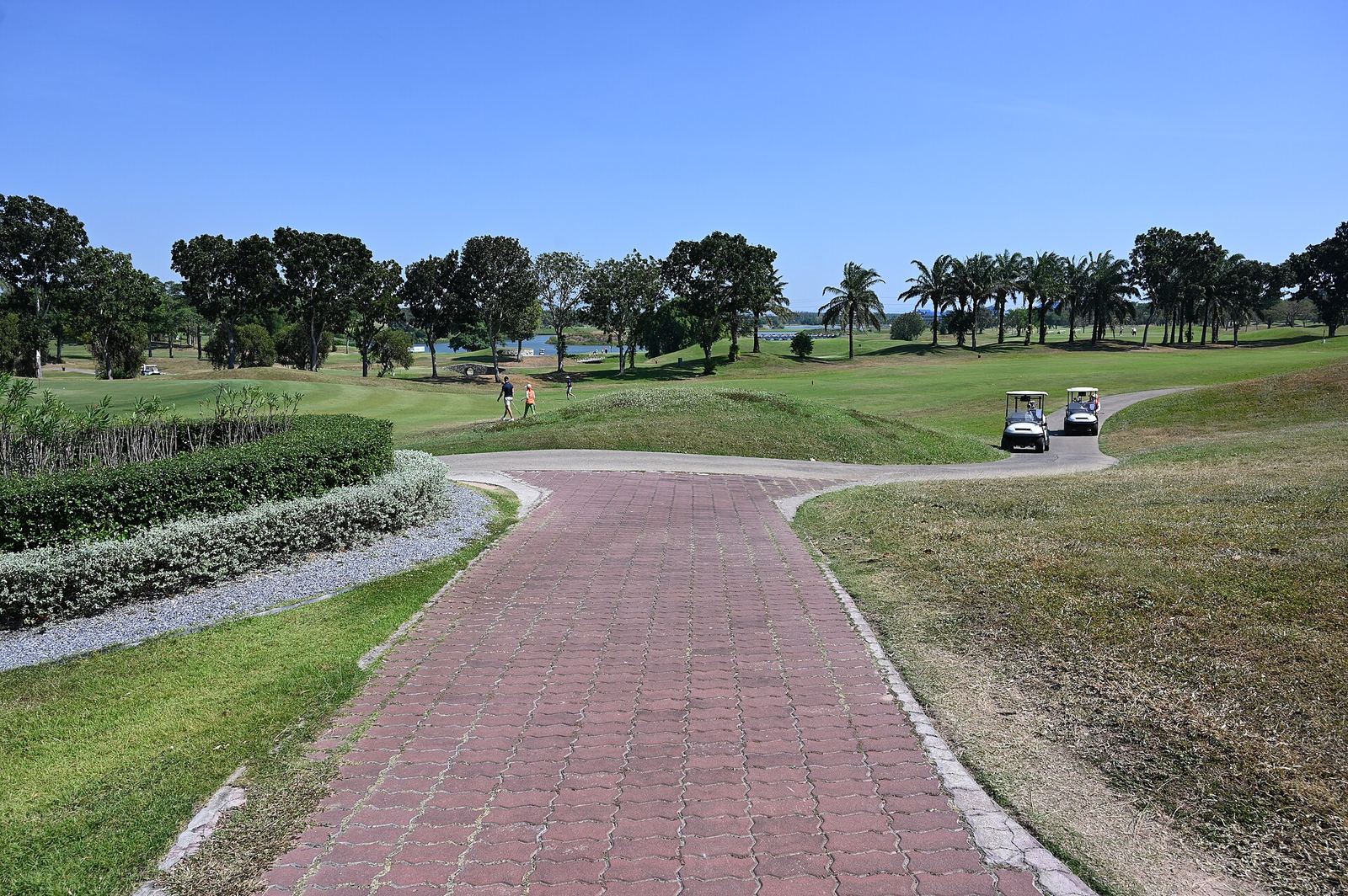
Geoffrey Cornish spent a career building golf for New England towns rather than for television, and the dataset shows the shape of that life. Thirty three of his courses sit in our records across eight states, Connecticut and Massachusetts and Maine, New Hampshire and Vermont, with outposts in Ohio, Rhode Island, and West Virginia. Municipal courses, resort courses, member clubs, a state park's worth of public golf. Cornish was the working architect of the postwar Northeast, a Stanley Thompson man who believed a town course deserved the same care as a famous one. Ranking his best means ranking that philosophy, and the top of the list shows what happened when his steady hand met difficult ground or serious money.
1Connecticut Golf Club
Easton, 1966, private, and the most dramatic build of Cornish's career. Lawrence A. Wien, a co-owner of the Empire State Building, commissioned it as a private retreat for New York golfers, and Cornish built it on a solid rock site, blasting ledges and relocating streams to create elevated tees and sharp doglegs. The par 4 16th has a four tier green roughly 68 yards deep. At 6,899 yards with a slope of 146, it is Cornish at full stretch, and Brian Silva, his former associate, lengthened and reworked it in 2002 while keeping the routing. Nothing else in his portfolio asks this much.
2Ellington Ridge Country Club
Ellington, Connecticut, 1959, private, par 72 at 6,936 yards with a slope of 139. Ellington Ridge hosted the Connecticut Open in 1975, 1979, 1998, and 2017, and the Connecticut Amateur in 2008, and it runs the Travelers Championship pre-qualifiers. Its finishing stretch is considered among the toughest in Connecticut, the 445 yard par 4 16th, the 239 yard par 3 17th, and the 473 yard par 4 18th, back to back to back. That closing run is the most championship tested golf Cornish ever built.
3Mohegan Sun Golf Club
Baltic, Connecticut, 1960, resort access, ranked No. 11 among Connecticut public courses by Golfweek. It began as Pautipaug Country Club, the Mohegan Tribal Gaming Authority bought it in 2007, and the renovations kept coming, Robert McNeil's in 2012 with all new greens and five rebuilt holes, then Ron Garl redesigning holes 3, 6, and 11. Par 72 at 6,790 yards. Cornish's routing survived two rebuilds, which is the strongest evidence a working architect can leave.
4The Quechee Club, Lakeland Course
Quechee, Vermont, 1975, private, the second Cornish course at Quechee, five years after his Highland Course. It plays 6,671 yards of links style golf along the Ottauquechee River and Lake Pinneo, with water in play on 17 of 18 holes. Seventeen. Most architects hide behind one signature water hole. Cornish built a whole course where water is the grammar, and Brian Silva restored both Quechee courses in 2012 after Tropical Storm Irene. The prettiest argument for Cornish as more than a municipal mechanic.
5Brunswick Golf Club
Brunswick, Maine, semi-private, where Cornish extended a course dating to 1898 from nine holes to 18 in the early 1960s, working alongside a 1920s Wayne Stiles and John Van Kleek redesign. It plays par 72 at 6,543 yards, hosted the 98th Maine Amateur in 2017 and the 2024 NESCAC Championship, and still runs a Patriots Day Tournament tradition that began in 1898. Layered authorship usually blurs a course. Here each generation, Cornish included, left the place more playable.
6Cedar Knob Golf Course
Somers, Connecticut, 1963, public, built on a 144 acre farm, par 72 at 6,734 yards. The Connecticut PGA named it the 2021 Walter Lowell Public Golf Course Distinguished Service Award recipient. The 18th is a dogleg left par 4 finishing over a pond with a fountain at its center, and juniors play free with an adult. This is Cornish's life's work in one address, good public golf, kept affordable, open year round when weather permits.
7Sterling Farms Golf Course
Stamford's municipal, 1972, built on 144 acres of a former dairy farm with the farm buildings worked into the routing, Robert McNeil renovating Cornish's design in 2005. Par 72 at 6,423 yards, slope 134, rated the No. 1 public course in Fairfield County year after year. Fairfield County has money for any architect it wants. Its best public golf is a Cornish muni on an old dairy farm.
8Stratton Mountain Golf Course
Vermont resort golf, 27 holes in three nines, Lake, Mountain, and Forest, the first two from Cornish in 1964. It hosted six LPGA Tour events from 1990 to 1995, and its Mountain nine par 5 fifth plays 621 yards downhill, among the longest holes in Vermont. Resort work was Cornish's third career, after clubs and towns, and Stratton is its peak.
The concession every Cornish ranking owes: his courses can feel dated to golfers raised on modern scale, and a few of his town layouts were built to budgets that show. He was not a visionary in the MacKenzie mold and never claimed to be. What he was, across 33 courses in our records and hundreds of New England Saturdays, is the architect who made sure ordinary towns got real golf. Connecticut Golf Club proves he could build drama when the rock and the budget allowed. Cedar Knob proves he usually chose to build for everybody instead. That choice is the career, and it holds up.