Town Rankings / North Carolina
The Best Golf Courses in Asheville
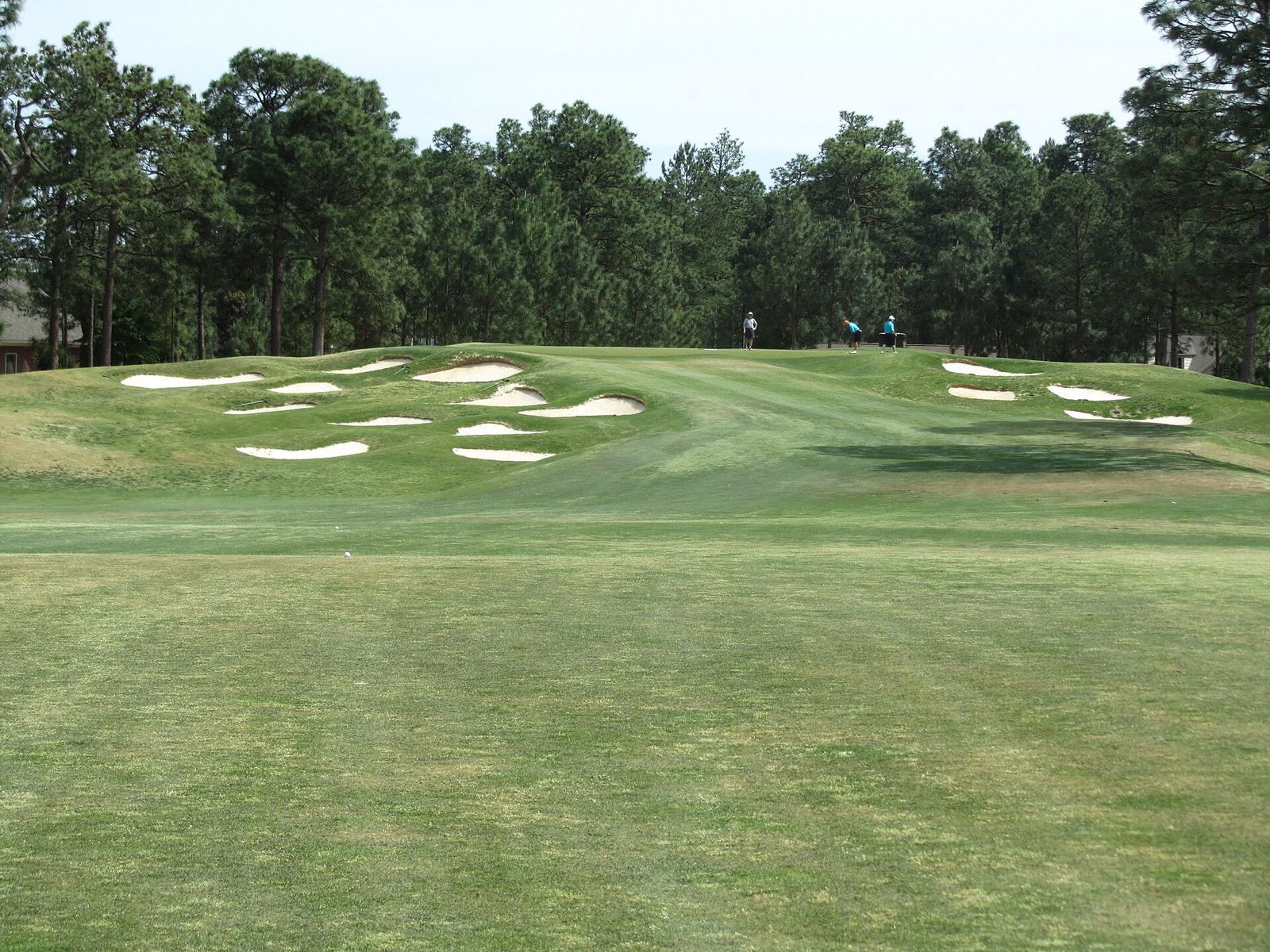
Four courses make this list and all four carry Donald Ross's name. Read that again. Asheville, a mountain city of under a hundred thousand people, has a Ross resort course from 1926, a Ross private club from 1922, a Ross muni from 1927, and a Ross club from 1928 with a modern renovation on top. Asheville spent the 1920s collecting Ross the way its hotels collected tourists, and the result is the strangest and best small-city golf bench in the South: one architect, four expressions, split between a resort, two private clubs, and a city course the floods nearly took.
So this ranking is not really about who designed what. It is about what a century did to four Ross courses in the same mountain light: which one kept its bones, which one kept its standards, and which one the public can still walk onto. We score the golf first, then the day, then access.
1Biltmore Forest Country Club
Biltmore Forest opened in 1922, the earliest of the four, in the residential enclave the Vanderbilt circle built beside the Biltmore Estate. It is private in the full sense, costs sit in a high estimate tier because the club does not publish them, and the golf is classic Ross parkland adapted to mountain ground: fairways that use the slopes rather than fight them, greens that punish the wrong side with the quiet cruelty Ross specialized in.
The case for No. 1 is purity. Biltmore Forest has spent a century as a members' club in a neighborhood built for permanence, hosting top Carolinas amateur events. Ross courses survive best where the membership understands what it owns, and Biltmore Forest's membership has had a hundred years of the real thing to learn from. Of the four courses here, this is the one where the 1922 idea is most intact.
The concession is access, total and unapologetic. You will likely never play it. Neither will most Asheville golfers. A ranking of a city's golf that leads with its least available course is making a claim about what rankings are for. Ours are for identifying the best golf. The best golf in Asheville is behind the Biltmore Forest gates.
2The Omni Grove Park Inn Golf Course
The Grove Park course, Ross in 1926, sits below the inn's stone terraces with the Blue Ridge and the city spread out in front of it. The inn opened in 1913 and the golf followed as part of the full resort idea, and the course hosted PGA Tour Asheville events in the 1940s era, when Ben Hogan won in Asheville and the resort circuit was a real circuit.
What Ross did here, on a compact and hilly site, is the compact and hilly version of his art. The routing squeezes a full test into ground that should not hold one, the views keep interrupting the golf, and the whole round plays in the presence of that enormous stone inn above you. As a day, nothing else in Asheville matches it. You can also simply book it. Resort access means the second-best course in town is the best course most readers will ever play here, and that combination of quality and availability is its own argument.
Why not first? Because the resort brief softens the test. Grove Park has to please hotel guests of every level, and Ross courses built for members, kept by members, keep an edge that resort golf trims for hospitality. Hogan won here when the course played for money. It plays gentler now, on purpose.
3Country Club of Asheville
The Country Club of Asheville, in the Beaverdam area, dates its Ross lineage to 1928 and has hosted Carolinas events across its long life as one of the city's oldest clubs. The distinguishing fact is the second name on the record: Richard Mandell did renovation work here, which makes this the one course in the four where the Ross inheritance has been actively reworked for the modern game rather than simply preserved.
That cuts both ways, and the ranking should say so. Renovation done well keeps a Golden Age course relevant to modern equipment; done to a Ross in the mountains, it risks sanding off exactly the quirks that made the course worth keeping. The club remains a serious test, and private costs here sit at a mid-to-high estimate tier. Third place reflects a course in good hands whose identity is part 1928, part renovation era, competing against two courses whose identities are simpler to state.
4Asheville Municipal Golf Course
The Asheville muni is a 1927 Donald Ross, city-owned, and that sentence alone should be enough to embarrass most American cities. A Ross muni is a civic treasure anywhere. In the mountains, on a river plain, it is close to unique. The city nearly lost it more than once over the years, and then Hurricane Helene's flooding in 2024 damaged it badly; recovery is ongoing.
Play it for what it is: a real Ross routing at municipal prices, the only one of these four courses a kid from Asheville can grow up on. The conditioning will not match the clubs above it, the flood recovery is a fact of its present, and the ranking puts it fourth on the golf while suspecting it might be first on the list of courses Asheville cannot afford to lose. Ross built for Vanderbilts at Biltmore Forest and for everybody at the muni, five years apart, in the same town. That a city still has both ends of that story is the whole reason this list exists.
Evening in the mountains comes early to the valley floors, and the last light leaves the muni and the inn and the two clubs in the same order it found them: all Ross, all still standing, all within a few miles of each other. No other town in America can say that. Asheville barely mentions it.