Town Rankings / Missouri
The Best Golf Courses in Branson
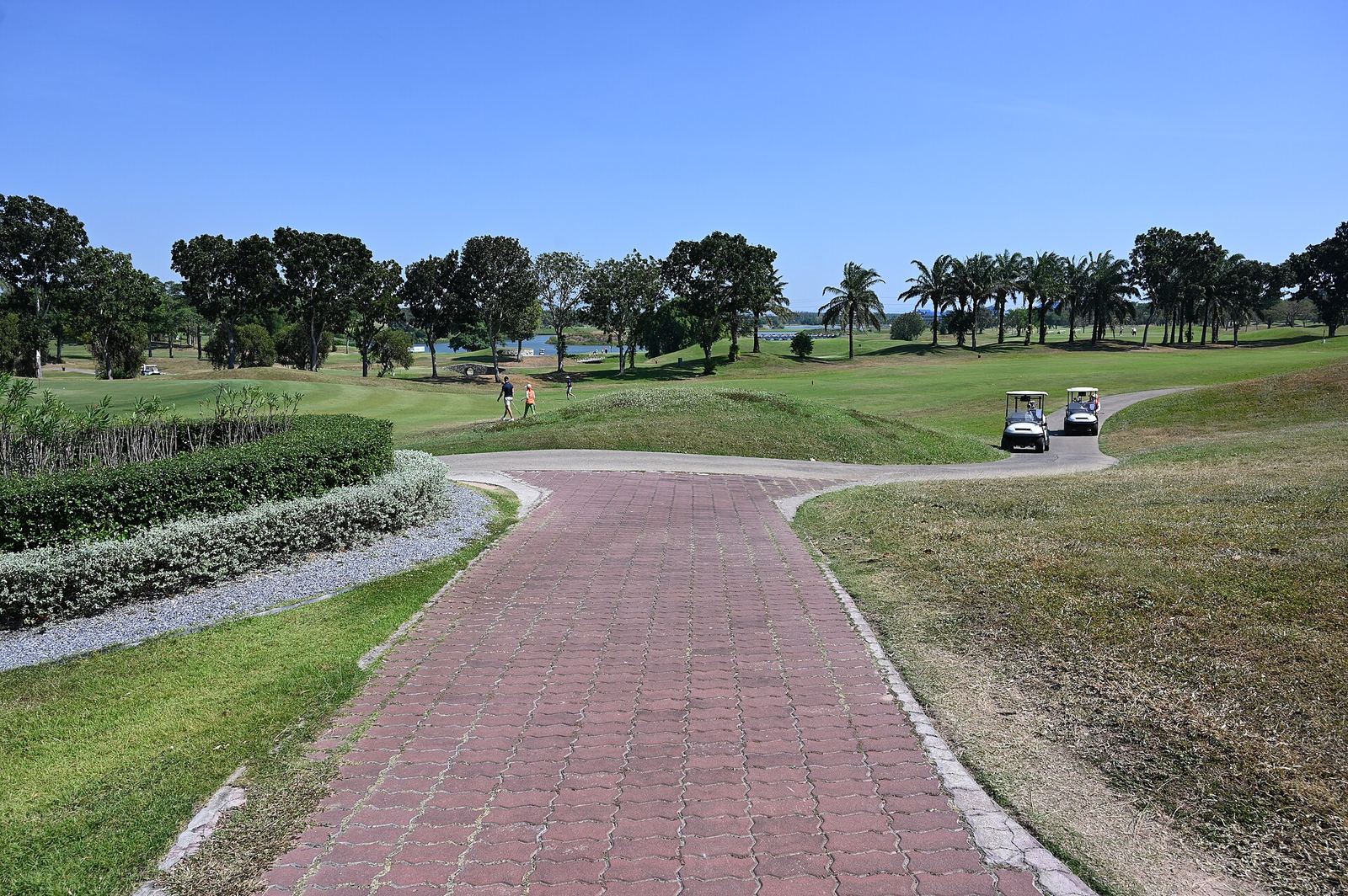
Branson built its name on theatres and tour buses, and then Johnny Morris built a golf empire in the Ozarks hills above it. That second act is the surprise. The man behind Bass Pro Shops treated these ridges and hollows the way he treats his stores, which is to say nothing was done at half scale, and the result is a cluster of courses around one resort campus that would be the headline act in most states. The shows still pack the strip at night. The golf now gives you a reason to be somewhere else all day.
Understand what this ranking is. Four of the five courses below belong to the same Big Cedar Lodge operation a few miles south of town, so this is less a survey of a town's scattered clubs than a pecking order inside one man's considerable portfolio, plus the one public course in Branson itself. We score the golf first, then the day, then access and value, and access here is unusually simple for golf of this level: these are resort and public courses. You pay, you play. That alone separates Branson from most towns on this list.
1Payne's Valley Golf Course
Payne's Valley is Tiger Woods' first public design, and it comes with the most talked-about extra in modern resort golf: a bonus 19th hole, an island green played as a settle-the-bet finisher after the round proper ends. Gimmick? Partly, and the course knows it. But the gimmick works because the 18 holes before it are built at a scale that suits the valley floor, wide off the tee, generous in the landing areas, and designed to let resort golfers swing hard while still punishing the genuinely crooked shot. Woods and his team understood the assignment. This is a course meant to be played by thousands of ordinary golfers a year and remembered fondly by most of them.
The honest knock is that width without menace can blur, and serious players sometimes walk off Payne's Valley calling it a very expensive good time rather than a great test. There is truth in it. The course rarely frightens you. We rank it first anyway, because in a resort town the best course is the one that defines the trip, and everything else in Branson is now measured against this valley and that island green on the ride home.
2Ozarks National Golf Course
If Payne's Valley is the crowd-pleaser, Ozarks National is the architects' course, a Coore and Crenshaw design laid along the ridgelines where the land does most of the talking. Their whole method is finding holes in the ground rather than imposing them, and these ridges gave them plenty to find: long views across the Ozarks, holes that ride the contours instead of flattening them, and green sites that feel located rather than built. It is the most intellectually interesting round in the Branson area, and plenty of visiting golfers quietly rank it first.
Why second, then? Two reasons. The ridge routing that makes it fascinating also makes it a sterner, windier day, less forgiving of the mixed-ability group that Branson golf mostly serves. And it lacks a single defining moment the way Payne's Valley has its finisher. Conceded: for the low handicapper travelling specifically for architecture, flip our top two and we will not argue hard. For the town ranking, it sits here.
3Buffalo Ridge Golf Course
Buffalo Ridge came first in the Morris building programme, a Tom Fazio course on high ground where the resort keeps buffalo grazing within view of the golf. Fazio does polish better than anyone, and this is polished Ozarks golf: framed holes, immaculate presentation, and a routing that shows you the hills from their most flattering angles. Before the two newer courses opened, this was the reason golfers added Branson to a trip at all.
Its problem is purely comparative. It now sits between two courses with clearer identities, the famous one and the architects' one, and Fazio's smoothness can read as sameness once you have played its neighbours. It remains a very good round and the natural second day of any Big Cedar trip. Third here is a ranking inside a strong family, not a dismissal.
4Branson Hills Golf Club
Branson Hills is the course actually in Branson, a public layout that works through the town's own hills and hollows, and it earns its place by being the round a visitor can book without the resort machinery around it. The terrain is genuinely dramatic in spots, with elevation changes that the flat-land golfer from Kansas City or St. Louis does not get at home, and the course uses that movement as its main defence.
The concession is conditioning and consistency, which swing with the season and the budget in a way the Big Cedar courses, with a resort's resources, do not. Play Branson Hills as the locals' option and the value play of the trip and it over-delivers. Ask it to compete on presentation with the three above and it cannot. Fourth, with respect.
5Top of the Rock Golf Course
Top of the Rock is a Jack Nicklaus par-3 course perched above Table Rock Lake, and it is last on this list for the simplest of reasons: it is a short course, and a ranking of a town's golf has to put the full 18-hole tests ahead of it. What it does, it does beautifully. The lake views are the best in the region, the holes are proper Nicklaus shots compressed into par-3 length, and as a late-afternoon round with a drink waiting at the clubhouse it may be the most pleasant hour in Branson golf.
Just do not mistake it for the main event, and do not let the resort sell it to you as one. It is the encore, not the show. In Branson, of all towns, that distinction should be easy to understand.