County Rankings / New York
The Best Golf Courses in Nassau County, New York
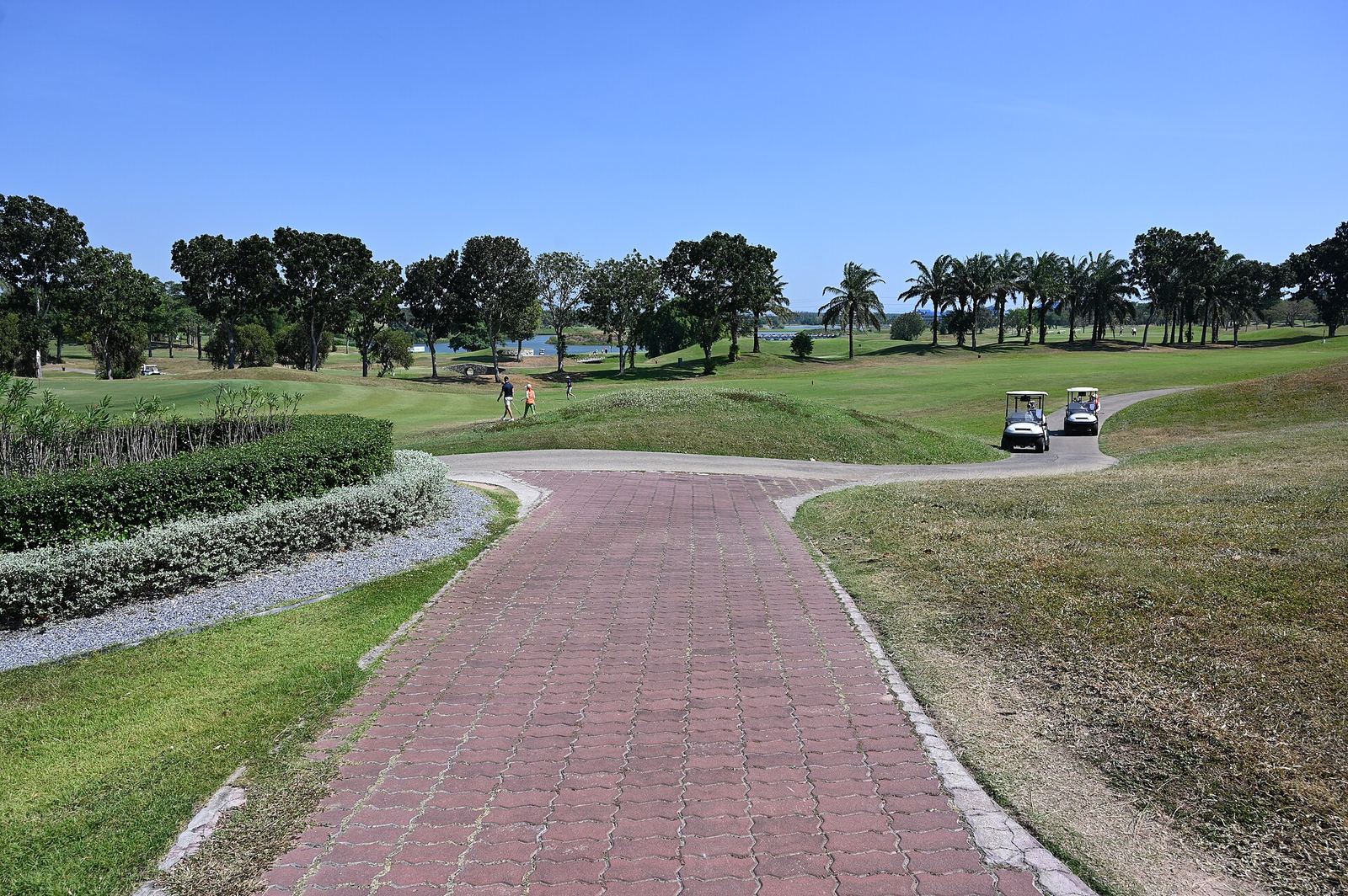
No county in America packs this much golf history into this little land. Nassau County, the western half of Long Island, holds a public course that has hosted two U.S. Opens and a Ryder Cup, a dozen Golden Age private clubs, and a second tier most states would build a tourism campaign around. Twenty courses sit on our bench. We score the golf first, then the day, then what it costs you, which in Nassau usually means whether you can get on at all. The statewide picture is in the New York state ranking. The county, best first.
1Bethpage State Park Black Course
Public. That word does more work in this ranking than any other. The Black Course at Bethpage, designed by A.W. Tillinghast with Joseph H. Burbeck and opened in 1936, plays par 71 at 7,468 yards with a slope of 155 and a rating of 77.5, and it carries the famous warning sign at the first tee. It hosted the U.S. Open in 2002, won by Tiger Woods as the only player under par, and again in 2009, the PGA Championship in 2019, where Brooks Koepka shot the course-record 63, and the Ryder Cup in 2025. It is called the People's Country Club, with golfers camping overnight for tee times, and it is the best course in the county by the only measure that settles arguments: it keeps getting chosen to settle championships, and anyone with a driver's license and patience can play it.
2Garden City Golf Club
Devereux Emmet opened it in 1901 and Walter J. Travis, the club's great player, shaped its character: par 73, 6,922 yards, and roughly 175 bunkers, many of them small, deep pits that take a stroke to enter and a stroke to escape. Garden City is the connoisseur's Nassau course, flat, firm, cerebral golf where the hazards are tiny and the punishment is total. Private, quiet, and utterly uninterested in modern length.
3Piping Rock Club
Charles Blair Macdonald and Seth Raynor, 1913, in Locust Valley: par 71 at 6,879 yards of classic Macdonald design with the famous template holes, the Redan and Biarritz lineage that defined American architecture's first school. Piping Rock is where you go to see the templates on home ground, an hour from the city Macdonald built them for.
4Engineers Country Club
Herbert Strong's 1917 design in Roslyn Harbor, par 71 at 6,780 yards, is the wild card of Nassau golf: dramatic terrain and bold features by the standards of any era, and it hosted the 1919 PGA Championship when the event was four years old. Engineers is the course on this list most likely to start an argument, because its greens and slopes divide players into converts and survivors.
5Fresh Meadow Country Club
Tillinghast again, 1923, in Lake Success: a classic par 70 at 6,817 yards that hosted the 1932 PGA Championship. Fresh Meadow is the purest Tillinghast club course in the county once you leave Bethpage, strategic and tree-lined, built in the decade when he was doing his best work everywhere at once.
6Meadow Brook Club
Dick Wilson's 1955 design in Jericho, par 70 at 6,988 yards, is the county's modern classic: challenging green complexes from the postwar school, renovated by Brian Silva. Where the Golden Age clubs test your angles, Meadow Brook tests your nerve on approach shots, and it has held its place among New York's best for seventy years.
7Nassau Country Club
The club in Glen Cove founded in 1896 gave the game the Nassau bet, which alone earns it a plaque. The course opened July 4, 1899, and was worked on over the years by Seth Raynor, Devereux Emmet, and Herbert Strong; it plays 6,688 yards, and the 15th, one of only two par 5s, is the standout hole. Bobby Jones received the Calamity Jane putter after a round here. History does not get much more literal than inventing the bet and arming Jones.
8Inwood Country Club
Founded in 1901 in the Five Towns, designed in its layers by Edward Eriksen, Herbert Strong, and Jack Mackie, par 71 at 6,647 yards, and a U.S. Open host in the championship game's early era, per Links Magazine's account. Inwood is the south shore's entry, links-adjacent by geography, and the oldest championship thread in the county after Garden City.
9Bethpage State Park Red Course
The Black's sibling and the county's second-best public round: Golfweek ranked the Red No. 8 on its 2026 list of the best courses you can play in New York, and a Golf Digest Long Island public panel put it third among the region's public courses behind the Black and Montauk Downs. The Blue, Green, and Yellow courses complete the five-course Bethpage bench below it, companion golf at a great address, in descending order of menace.
10The Creek
Locust Valley's other classic address, private, sharing the North Shore ground and the old-money register with Piping Rock. We place The Creek on reputation and setting in broad strokes: a Golden Age club course in the county's most storied golf neighborhood, which in Nassau County is a high floor even without a championship résumé to recite.
11Glen Oaks Club
Private in Old Westbury, ranked No. 24 on Golf Digest's Best in State list for New York, a modern tournament-capable club that represents the county's newer money and bigger scale. It sits below the Golden Age set here because our rubric pays for architecture and the day over event infrastructure, but the state panel's number is real.
12Deepdale Golf Club
Manhasset, private, ranked No. 124 on Golfweek's classic courses list, one of the quietest famous names in American golf. Deepdale's members have never needed the course explained to anyone, which is rather the point of Deepdale.
The tail is still Nassau-deep: the Rockaway Hunting Club, among America's oldest country clubs, on the south shore; Sands Point and the Seawane Club on the north and south shores respectively; and the Town of Oyster Bay course carrying the public flag outside Bethpage. In most counties any of them would anchor the list. Here they close it, behind a municipal course with a warning sign that has hosted everything. That is Nassau County: the public course is the best course, and it is not close.