Town Rankings / South Carolina
The Best Golf Courses in North Myrtle Beach
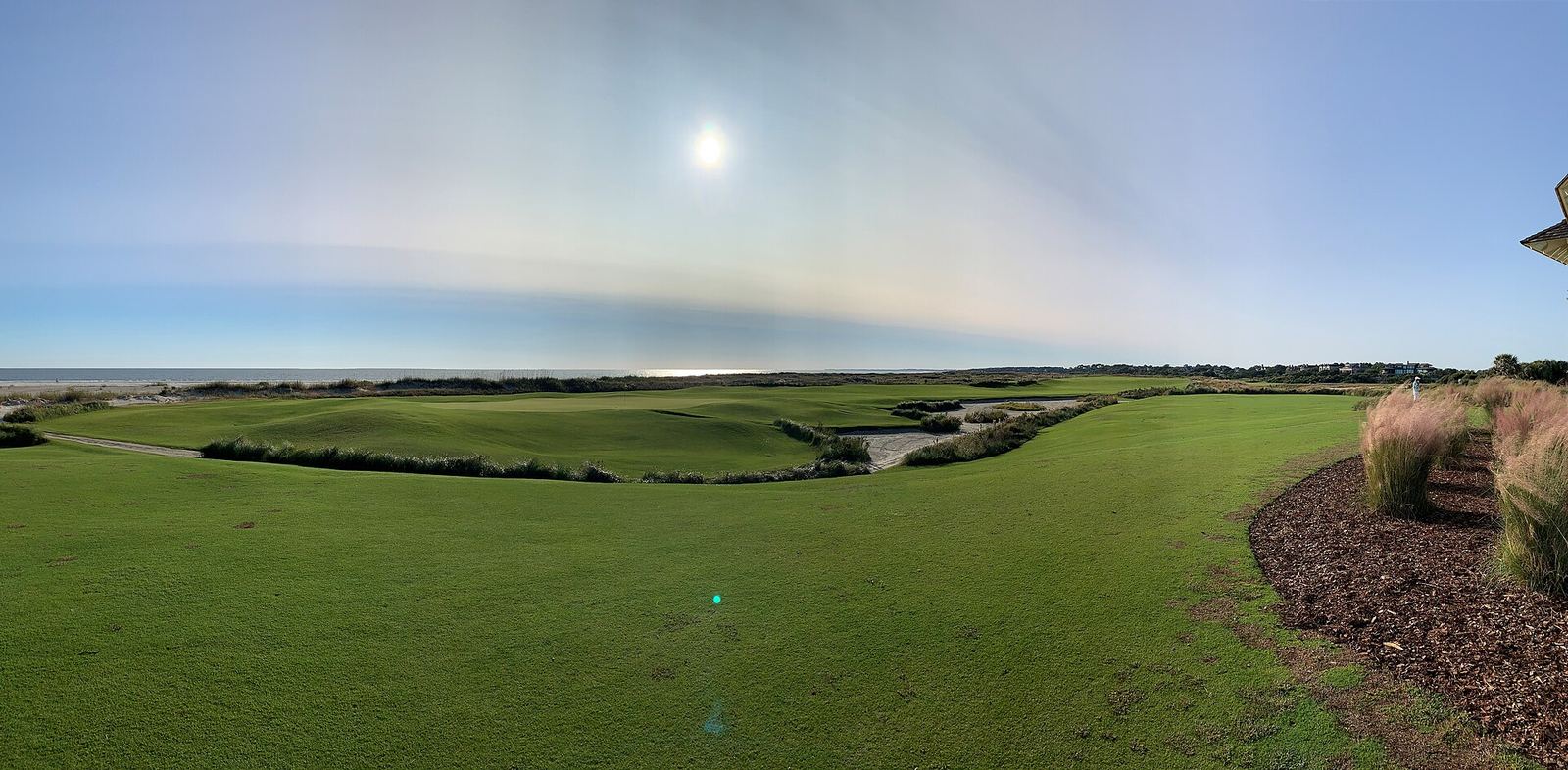
In 2000, Barefoot Resort opened four courses at once, by four different architects, on one property in North Myrtle Beach. It was a golf boom move, the kind of thing that looks reckless in hindsight and brilliant in a brochure. Twenty five years on, the interesting question is not whether the experiment worked. It is which of the four you would actually spend your one free morning on, because the answer inside the resort gates is not the answer for the town.
North Myrtle is the quieter end of the Grand Strand, Cherry Grove and Ocean Drive instead of the central strip, and its golf splits into two kinds: the Barefoot four, all resort access and all priced like it, and one older course on a peninsula that was beating newcomers before Barefoot existed. This ranking puts the golf first. By that measure, the peninsula wins, and it is not particularly close.
1Tidewater Golf Club
Tidewater opened in 1990, designed by Ken Tomlinson, an amateur architect, which remains one of the better trivia answers in South Carolina golf. The course he produced on a peninsula between the Intracoastal Waterway and Cherry Grove Inlet was named Best New Public Course in America by both Golf Digest and GOLF Magazine on opening. Amateur architect, professional result.
Nine holes play along water or marsh, and the par 5 13th gives you a view of the Atlantic, a combination of inland waterway, inlet and ocean that no course at Barefoot can assemble on one property. It ranked among America's top 100 public courses in its early decades and has come back into recent re-ratings, which matters more than the early hype. Plenty of courses open hot and fade. Tidewater faded from the lists, kept its setting and its routing, and got found again.
The concession is price and conditioning variance. It runs at premium North Myrtle pricing for public and semi-private access, and a course this exposed to marsh and weather has good years and ordinary ones. At its best, though, it is the only course in town that belongs in a state level conversation, and rankings should say so plainly.
2Barefoot Resort Love Course
Davis Love III's course, also opened in 2000, is the best of the Barefoot four, and the margin is about playability done properly rather than playability as a euphemism for easy. Wide fairways, large greens, room to miss in the right places. Love built a course a resort golfer can enjoy and a good player still has to think around, which is a harder trick than it sounds.
Its visual signature is a recreated plantation house ruin behind the 4th green, a bit of theatre that could have been embarrassing and instead works, because the hole in front of it is good enough to carry the decoration. It is consistently ranked among South Carolina's best public courses.
The concession is ceiling. Nothing at the Love Course scares you, and a ranking that rewards the golf first has to notice when a course never really asks a hard question. It asks pleasant ones, answers them well, and finishes second in its own town to a course that asks harder ones over better ground.
3Barefoot Resort Fazio Course
Tom Fazio's contribution plays through the resort's central lakes and pine land, and it is the most polished of the four in the way Fazio courses usually are: water placed where your eye and your miss both go, bunkering that frames target lines, conditioning that rarely gives you anything to complain about. Golfweek and Golf Magazine lists have ranked it among South Carolina's top public courses, and on a calm morning it is an easy course to overrate in the parking lot afterwards, in the good way.
The concession is that polish is the ceiling as well as the floor. The Fazio Course does the resort brief about as well as the brief can be done, but the Love Course is more fun and Tidewater is more distinctive, so third is where a very good execution of a familiar idea lands. Some groups will prefer it to the Love Course for a second round. Nobody sensible prefers it to Tidewater.
4Barefoot Resort Norman Course
Greg Norman's course is the most open and links-like of the Barefoot four, with sod-faced bunkers, wide corridors, and seven holes playing along the Intracoastal Waterway. On paper that waterway count should compete with Tidewater. In practice the holes run along the water more than they engage it, and the openness that feels like freedom on the front nine can feel like exposure when the wind picks up and every miss is a long walk in short grass to a worse angle.
The concession runs the other way for once: judged purely as a change of pace inside a Barefoot trip, the Norman might be the second course you book, because it plays nothing like its three siblings. But a town ranking is not a trip itinerary. As a standalone round it is the fourth best option here, a good course standing in a town where good is a crowded category.
Four architects, one resort, one winner from outside the gates. Cherry Grove had the best ground in North Myrtle Beach all along, and in 1990 an amateur architect knew what to do with it.