Town Rankings / North Carolina
The Best Golf Courses in Wilmington, North Carolina
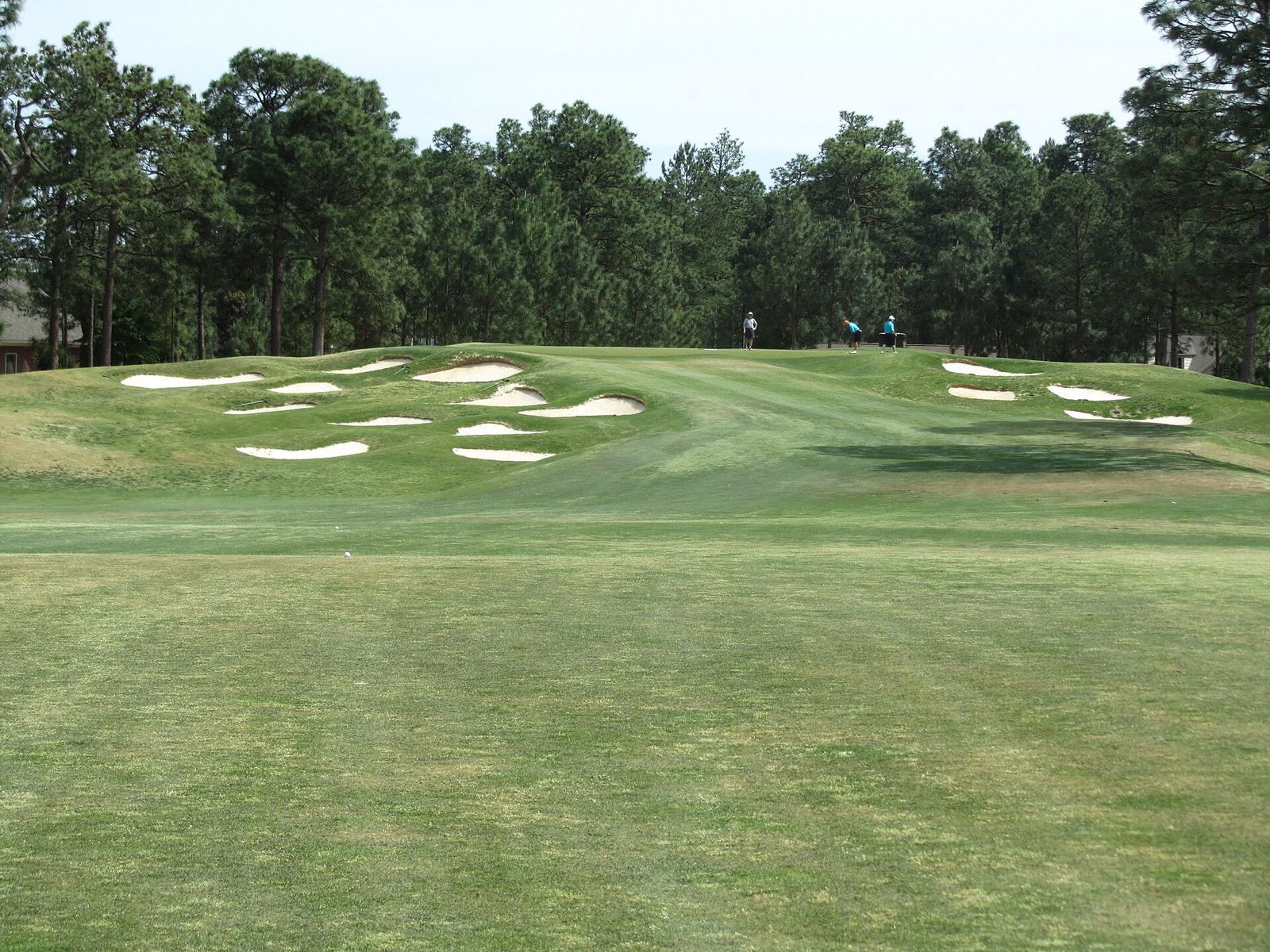
Wilmington golf starts with an age claim most American cities cannot make. Cape Fear Country Club was founded in 1896 and bills itself in the record as among the state's oldest clubs, the oldest in continuous use by the local telling, with Donald Ross design work layered in during the 1920s. This is a port city. Its golf grew up with the shipping and the summer houses, not with a resort developer's master plan, and that older, in town character still sets the top of this list.
The modern counterweight is Landfall, the big gated community toward the Intracoastal, which gives Wilmington two private headliners under one roof: a Pete Dye course and a Jack Nicklaus course. Add a public resort option from 1988 and the city has a compact, readable ranking. Old club first, the two Landfall courses in architect order, and the public course where public courses usually land, with credit for existing.
1Cape Fear Country Club
Founded in 1896, Cape Fear is the rare club whose age is not a marketing refresh. Golf has been played under this name in Wilmington since the nineteenth century, Ross contributed design work in the 1920s era, John LaFoy carries the renovation lineage in the modern record, and the club hosted the PGA Tour's Azalea Open across the 1940s through the 1970s era, when Wilmington was a regular stop in professional golf's traveling years.
That is the full package for a city ranking: an in town classic layout, a Ross layer, a Tour history with a flower in its name, and a club that never had to be reinvented as something else. The coastal setting works quietly here. This is not oceanfront golf and does not pretend to be. It is lowcountry club golf, played by generations of the same city.
The concession is that the Ross contribution is a layer, not a full Ross original on the level of his Sandhills courses, and the private, high estimate tier costs put it behind a gate for most Wilmington golfers.
It still takes No. 1 clearly. Landfall has the bigger modern names. Cape Fear has the city's golf history in one address, and history earned over 125 years beats history purchased in 1987.
2Landfall Club Dye Course
Pete Dye opened his Landfall course in 1987, and the club, formally the Country Club of Landfall, built its identity around the pairing ever since. Dye's design works the marsh and the Intracoastal influence into the golf, which is the correct instinct on this coast: the water here is not a backdrop, it is weather, tide, and trouble in one package.
The competitive record backs the ranking. Landfall has hosted NCAA championships and the Landfall Tradition, the women's college event tied to UNC Wilmington golf, which keeps the course in the modern game rather than in a brochure. Of the two Landfall courses, Dye's is the one with the sharper edges and the stronger reputation among players who like their golf with some argument in it.
The knock is Dye's usual one. His courses divide golfers into admirers and survivors, and a member playing 100 rounds a year may tire of hazards that a visitor finds thrilling twice a year. Second place, ahead of its sibling, on the strength of the setting used properly and the championships on the record.
3Landfall Club Nicklaus Course
Jack Nicklaus followed at Landfall in 1990, giving the club 36 private holes across two of the biggest design names of the era. The Nicklaus course is parkland through the community, the smoother and more conventional of the pair, and it has hosted its share of collegiate and amateur events in the club's history.
There is a genuine debate inside Landfall about the order of these two, and members who value playability over Dye's provocation will reverse them. We will concede that for the everyday member game, the Nicklaus may be the better companion: generous where Dye is pointed, calm where Dye is busy.
Rankings, though, score the golf at its best, and Dye's best holes at Landfall use the coast in ways the Nicklaus course does not attempt. Third place in the city, second in its own club, and a strong course by any standard that does not involve comparing it to a 1896 institution up the road. Private, like its sibling, with costs in the high estimate tier.
4Beau Rivage Golf and Resort
Beau Rivage closes the list as Wilmington's public and resort option, opened in 1988, Cape Fear area golf for the visitor and the local without a Landfall or Cape Fear connection. Its record in our files is thin: public access, a community course role, no architect we can name with confidence. We will not invent one.
Its value is structural. A city ranking where every course above the line is private needs a door that opens, and Beau Rivage is that door in Wilmington. Golf trips need a first round after the drive in and a last round before the drive home, and public resort golf does that work without ceremony.
Fourth, then, and honestly so. The three private courses above it carry Ross, Dye, and Nicklaus between them, which is an unfair fight for any public track. Beau Rivage's fight is different: keep Wilmington's visitors and new golfers playing, somewhere near the river, with the sea breeze doing what it has done over this city's golf since 1896.