Course Comparisons / Kentucky
University Club of Kentucky Wildcat Course vs. Kearney Hill Golf Links: The Lexington Choice
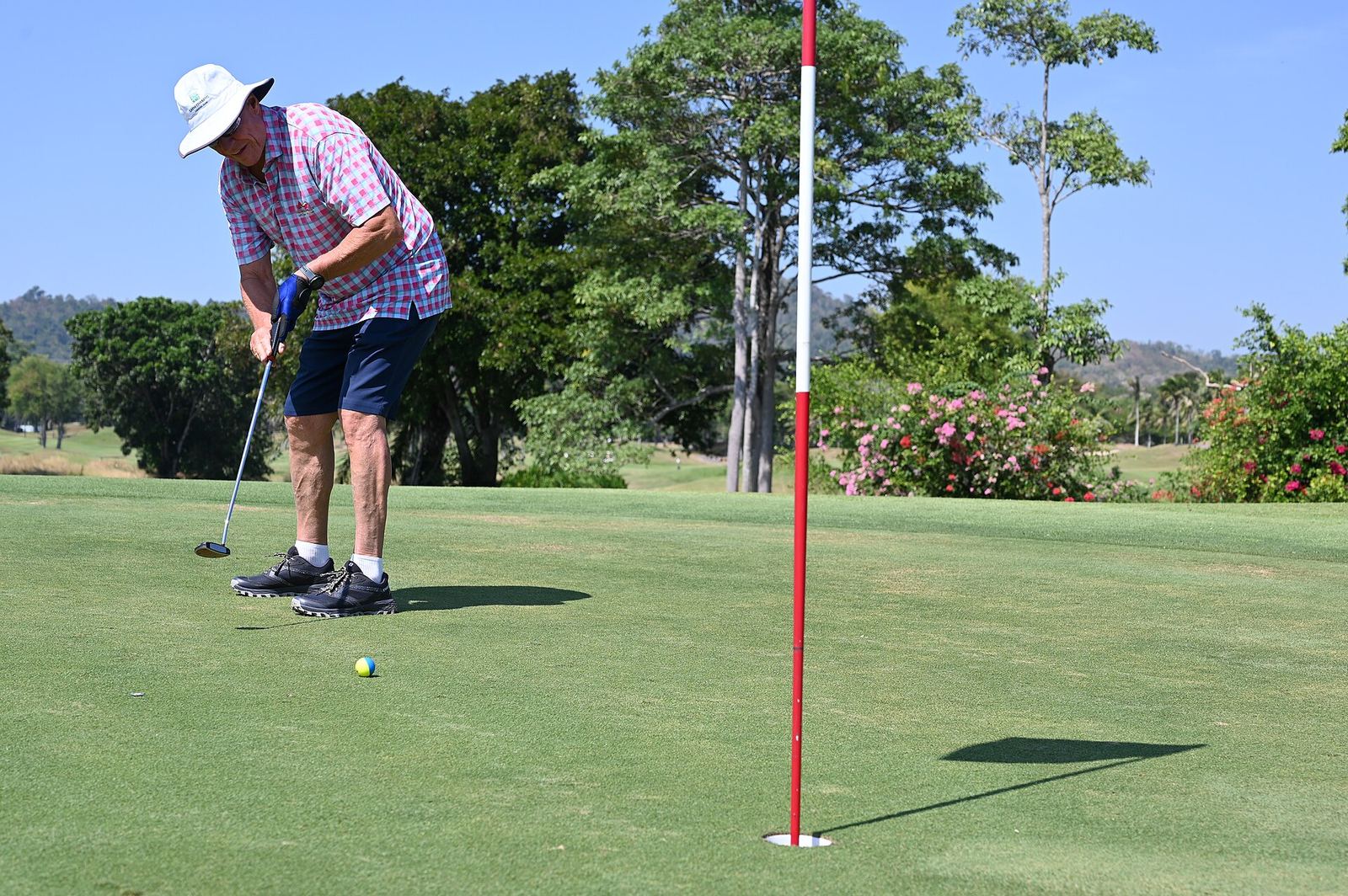
Lexington offers two kinds of public-facing golf, and they could hardly look less alike. The Wildcat Course at the University Club of Kentucky is parkland: trees, creeks, ponds, bentgrass greens, the official home of the Kentucky Wildcats. Kearney Hill Golf Links is a Pete Dye municipal course built to look like Scotland blew into Fayette County: open rolling ground, deep bunkers, almost no trees, and wind doing the work trees do at the Wildcat. A golfer with one free day in Lexington is choosing a style as much as a course.
The Wildcat: parkland with a team attached
The Wildcat is one of 36 holes at the University Club, alongside the Big Blue Course, on a 300-acre facility with a dozen lakes and ponds worked through the property. Arthur Hills designed the Wildcat, which opened in 1992 and plays par 71 at 6,680 yards. Of the club's two courses it is the more parkland of the pair, rolling through trees along creeks and ponds, with bentgrass greens and multiple tee boxes that let the staff set it up anywhere from friendly to genuinely demanding.
The university connection is not decoration. The University Club is the official home of the University of Kentucky men's and women's golf teams, which means the Wildcat is maintained and set up with college players in mind, the one semi-private customer base in America that reliably punishes a course's weak holes. For the visiting golfer the practical translation is conditioning and challenge a notch above the typical semi-private, plus the atmosphere of a facility that serious players use daily. If your game is built on hitting it straight through corridors and putting on bentgrass, the Wildcat is your Lexington round. In our Lexington ranking, it is the parkland standard.
Its concession: parkland is the most common golf dialect in Kentucky, and the Wildcat speaks it well rather than distinctively. You will enjoy it, and a month later you may struggle to describe its holes in order.
Kearney Hill: Dye at municipal prices
Kearney Hill is owned by the City of Lexington, which still surprises people who know the résumé. Pete Dye and P.B. Dye designed it in 1989 in northwest Fayette County as a Scottish-style links: deep sand and grass bunkers, sparse trees, open rolling terrain, and wind as a prominent factor, in the city's own description. It plays par 72 between 6,625 and 7,062 yards, with a lake waiting at the 15th, 16th, and 17th, a closing stretch with real water on a style of course that usually saves its trouble for sand.
The tournament record is far beyond municipal norms. Kearney Hill hosted Senior PGA Tour events from 1990 to 1997, eight of them, with Gary Player winning twice. Tim Clark won the 1997 U.S. Amateur Public Links here, the women's Public Links followed in 2007, and the course has since hosted the Girls Junior PGA in 2018 and the 100th Kentucky Open. Golf Digest has ranked it among the top ten courses in Kentucky, per the city, and it is open year-round except Christmas Day. In the Kentucky state ranking, Kearney Hill is the standing proof that a city can own a course with a national championship pedigree and charge the public to play it.
Its concession: links style in Kentucky is an interpretation, not the original. There is no sea, the turf is not fescue on sand, and on a calm, humid August day the wind defense sits down and the course plays softer than its design intends.
The verdict
Kearney Hill wins this pairing. A Pete Dye design with Senior Tour history, two USGA Public Links championships, and a top-ten-in-state ranking, owned by the city and open to anyone, is the rarest thing in this comparison, and the more memorable round: the bunkering, the open ground, and the lake-guarded finish will stay with you longer than the Wildcat's corridors.
Pick the Wildcat instead if you want bentgrass greens, tree-lined shot values, and the college golf setup, or if the wind is up and you would rather lose your ball in a creek than in a Dye bunker. Lexington is lucky to have the argument at all. Most cities its size get one public course worth discussing. It has two, built in opposite languages.